How to Have an Orgasm: Learning Alone, With a Partner, and What Gets in the Way
How to have an orgasm, mainly for people with vulvas: the conditions that help, how sex therapists teach solo learning, tips with a partner, and common blocks.

General education, not medical advice. If something here worries you, talk with a clinician.
Table of Contents
If you are wondering how to have an orgasm, start with a fact that surprises many people: it is often learned, not automatic. Recent data show 16 to 25 percent of women in the US, Australia, Canada and Sweden report orgasm difficulties. Many others orgasm alone but not with a partner. Both are common, and for many people they improve with practice and the right kind of touch, though there is no guarantee and no deadline.
For people with vulvas, the right kind of touch usually involves the clitoris. In a national US survey of 1,055 women, only 18.4 percent said intercourse alone was enough for orgasm. Another 36.6 percent said clitoral stimulation was necessary during intercourse. So if penetration alone never worked for you, you are in the majority.
This guide covers the conditions that help, how sex therapists teach solo learning, what changes with a partner, and the blocks that get in the way. Most of the research studied women, so the advice is mostly for people with vulvas.
Conditions that make orgasm easier
Orgasm comes more easily when your body feels safe, unhurried and comfortable. Technique matters less than most articles suggest until those basics are in place.
Time and privacy come first
Pick a time when nobody will knock and nothing is due afterwards. Lock the door and silence your phone. These steps sound obvious, but a part of the brain keeps listening for interruptions, and that background alertness works against arousal.
Give yourself far more time than you think you need. Sex therapist Lisa Thomas notes that it can take a long time, up to 45 minutes in her experience, to relax enough for orgasm when you are learning. That is one clinician’s observation, not a standard to hit. The point is that taking a long time is normal, so it helps to take the clock out of the room.
Thomas also points out that learning alone often works better than learning with a partner. Being alone removes the worry about being watched or about how long it is taking.
Relaxation and arousal work together
Thomas names arousal and relaxation as the two things orgasm needs. They feed each other. A tense body is slow to become aroused, and arousal builds more easily once your shoulders, jaw and breathing have settled.
Spend a few minutes winding down before you expect anything. A warm shower, slow breathing or simply lying still all count. In the national survey summarised in Psychology Today, women said orgasm was better when they spent more time building arousal. Fewer than 20 percent said the length of sex itself made the difference. In other words, the warm-up is the part worth stretching out.
Lube and comfort
Friction and dryness are distracting, and distraction stalls arousal. Lube is a simple fix. A US national survey found almost 20 percent of women said their natural lubrication was not enough for comfortable intercourse. In a separate survey of 2,451 women recruited online, 94 percent agreed that lube makes sex feel more pleasurable. That second sample chose to answer a survey about lube, so read the figure as a strong preference among the women who chose to answer.
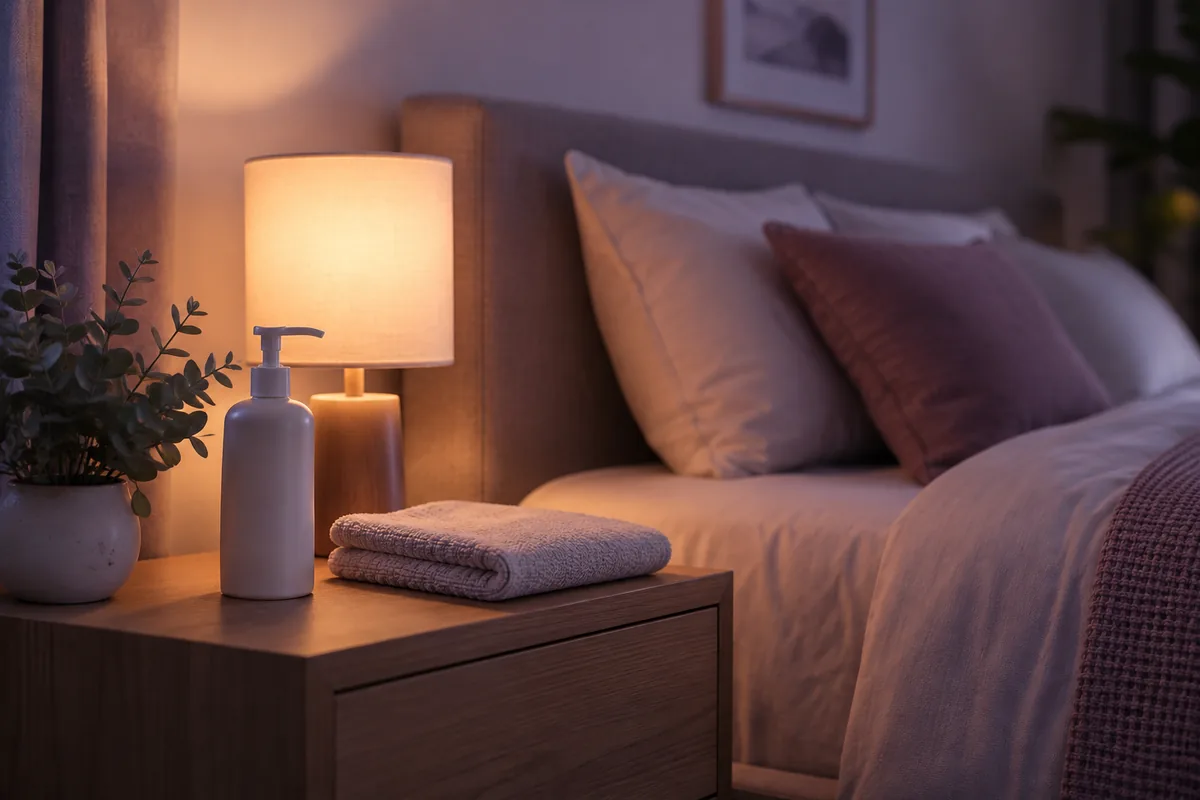
Comfort covers more than lube. A warm room, a supportive pillow and loose clothing all remove small irritations that pull your attention away.
A mindset of curiosity, not a target
Pressure is one of the most reliable ways to block orgasm. If each session becomes a test, worry builds, and worry crowds out sensation. Try treating sessions as research into what feels good. A session that ends without orgasm but teaches you that lighter touch works better was still useful.
Learning on your own: how sex therapists teach it
The most reliable way to learn is on your own, in small stages, without a goal at first. Sex therapists have a name for this approach, and it has a clinical track record.
What directed masturbation is
Directed masturbation is a structured self-learning program used in sex therapy. The MSD Manual, a clinical reference for doctors, calls it the first-line treatment for female orgasmic disorder. It describes the method as a series of prescribed exercises. A therapist sets the exercises, and you do them in private at home. The manual also notes that no medication has been shown to treat female orgasmic disorder. That makes the learning approach the main option.
Many people use a home version of the same idea without ever seeing a therapist. The structure is what helps: each stage is small, so there is little room for pressure.
The stages, in plain terms
The program starts with getting to know your body rather than trying to reach orgasm. Lisa Thomas describes beginning with a mirror and gentle touching exercises to learn how your genitals look, feel and respond. Nothing is supposed to happen at this stage. The aim is familiarity.
Once that feels comfortable, the next stage is exploring touch and noticing what builds arousal. Preferences vary widely. In the national survey, only 1 in 10 women liked firm pressure, and many preferred touch around the clitoris rather than directly on it. Over 75 percent liked patterns such as rhythmic or circling motion, or alternating lighter and firmer touch. Use those as starting points to test.
Arousal tends to rise and fall in waves. When it builds, keep doing what you were doing rather than speeding up. When it fades, slow down and go back to what felt good earlier. If you feel stuck, Thomas suggests adding fantasy or trying a simple vibrator.
How to orgasm as a woman: clitoral, vaginal, or both
The clitoris is much larger than the small visible tip. Cleveland Clinic describes it as a wishbone-shaped organ that extends inside the pelvis, and the whole structure is sensitive. That is why touch near the clitoris, and sometimes pressure from inside the vagina, can feel good.
People often ask whether “clitoral” and “vaginal” orgasms are different types. The more useful question is which kinds of stimulation work for you. For most women in the national survey, the clitoris played some part, whether it was needed or simply made orgasm better. Roughly 36 percent did not strictly need clitoral touch but said it made orgasm feel better. For a closer look at the physiology, see what happens during an orgasm.
Where vibrators fit
A vibrator is optional. Some people learn with their hands alone. Others find a vibrator gives steadier, stronger stimulation than a hand, which can help when arousal keeps stalling. The MSD Manual notes that a vibrator placed near the clitoris may help women with orgasm difficulty.
The research is still thin. The International Society for Sexual Medicine says there are only a limited number of studies, though early evidence links vibrators with better arousal, satisfaction and orgasmic response. A systematic review it describes found 17 studies, only 8 of them on sexual function. That is promising but unproven.
How to reach orgasm with a partner
With a partner, orgasm usually comes down to two things: enough of the stimulation you already know works, and enough comfort to ask for it. The research on who orgasms during partnered sex makes this unusually clear.
The orgasm gap in numbers
Women who have sex with men orgasm less often than their partners. Flo Health reports a national estimate that 65 percent of heterosexual women usually or always orgasm during partnered sex. The figures for bisexual and lesbian women are 66 and 86 percent. Physician Jolene Brighten, quoted in Glamour, puts the figure for straight men at 95 percent. These figures count people who usually or always orgasm, so the rest are not people who never do.
If the gap were biological, women would orgasm less often whoever their partner was. Lesbian women, though, report orgasm rates close to men’s. A Rutgers study reported by NBC News found lesbian women reported more clitoral stimulation and higher orgasm expectations than heterosexual women. One of the authors, Grace Wetzel, told NBC News that women having sex with men typically do not get enough clitoral stimulation to have an equal chance at orgasm. The common script of foreplay, intercourse, his orgasm and then the end leaves little room for what most women need. The study was correlational, so it shows a pattern rather than proving a cause.
Saying what you learned
Once you know what works alone, the next step is showing or telling a partner. Thomas recommends exactly that order: learn on your own, then bring that knowledge into your sexual relationship. If a vibrator helped, it can come too.
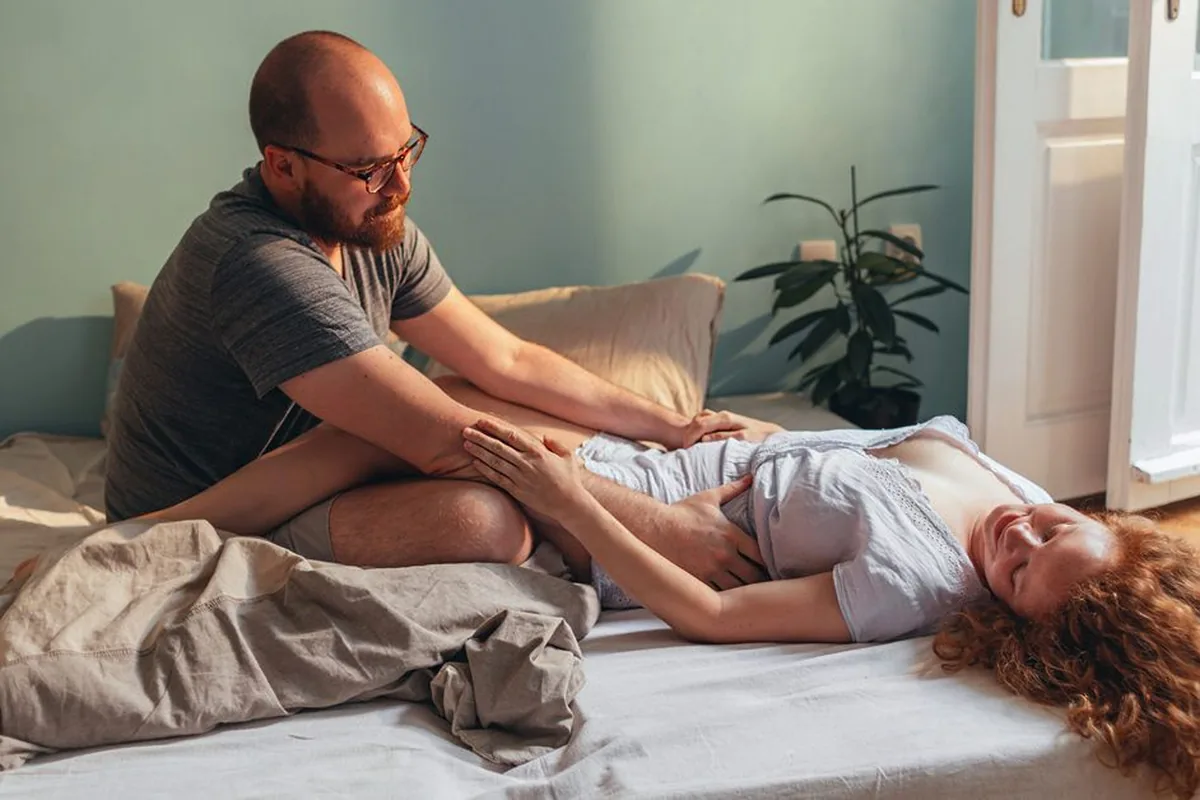
Asking is harder than it sounds. Wise notes that being able to orgasm alone but not with a partner is common. It often comes from discomfort letting go, or from trouble asking for the exact stimulation you need. Flo Health, summarising the survey data, reports that the women who orgasm most often are more likely to receive oral sex and to feel comfortable asking for what they want.
It can help to talk outside the bedroom first, when nothing is at stake. Try framing it as information rather than criticism, such as lighter and slower usually works better for me. During sex, guiding a partner’s hand or a simple yes, like that is often easier than a speech.
Positions that allow clitoral contact
Intercourse positions differ in how easily someone can touch the clitoris during sex. Woman-on-top positions let the person on top control angle, pace and pressure, and leave room for a hand or small toy. Our guide to the cowgirl position covers variations.
The missionary position can be adjusted too, for example with a pillow under the hips or a closer, rocking motion that keeps more contact. Side-lying positions such as spooning leave a hand free. Whatever the position, most women in the national survey said clitoral stimulation during intercourse was necessary or made orgasm better. A hand, a toy or body contact can all provide it.
Partnered sex also does not have to centre on penetration. Touch, oral sex and toys count as sex, and they are often where orgasm happens.
What gets in the way of orgasm
The most common blocks are a busy or anxious mind, medicines, pain and alcohol. Several often stack up at once. Knowing which ones apply to you tells you what to work on first.
Anxiety and spectatoring
Anxiety pulls attention away from sensation. A Psychology Today piece on performance anxiety describes worried people ruminating during sex instead of noticing what feels good. Its advice is to start by taking the focus off orgasm. That sounds backwards, but it works on the actual problem, which is pressure.
Sex researchers William Masters and Virginia Johnson coined a term for one version of this in the 1970s: spectatoring. It means watching and judging yourself during sex, as if from the outside, rather than feeling what is happening. Typical thoughts run along the lines of is this taking too long or what do I look like right now.
Attention training is the usual counter. The MSD Manual notes that mindfulness can help women stay with sexual sensations without judging or monitoring them. In practice, that means noticing when your mind drifts and gently bringing it back to touch, breath or temperature. Sensate focus, a structured set of touching exercises used in sex therapy, is another suggested way out of spectatoring.
Medications, especially SSRIs
Antidepressants are one of the most common medical causes. A peer-reviewed review reports that sexual side effects affect 25 to 73 percent of people taking an SSRI. These include delayed or absent orgasm, lower desire, arousal problems and, for people with penises, ejaculation problems. The range is wide because studies measure the problem differently, and the true rate is not known.
Depression itself can dampen sexual response, so the drug is not always the only cause. In one group with major depression, over 40 percent of men and 50 percent of women reported reduced sexual interest before starting antidepressants. If you suspect a medicine, talk to the prescriber about options. Do not stop or change a dose on your own.
Pain, alcohol and other physical causes
Pain and orgasm rarely mix. The MSD Manual explains that pain and poor arousal feed each other, making sex less enjoyable and lowering the chance of orgasm. If sex hurts, stop and get it checked rather than pushing through. Pain is a good reason to see a clinician.
Alcohol often gets credit it does not deserve. It may lower inhibitions, but HealthyWomen reports that drinking delays orgasm for some women and prevents it for others. Other physical causes include diabetes, nerve damage and some skin conditions of the vulva.
When it might be anorgasmia
Anorgasmia, or female orgasmic disorder, is the medical term for ongoing difficulty. Doctors diagnose it when orgasm is absent, much delayed or much weaker on nearly every occasion, despite normal arousal. It must last 6 months or more and cause you distress. Some people are not bothered by rarely having orgasms, and that is fine too.
See a doctor or a sex therapist if orgasm stopped after a new medicine or if sex is painful. The same applies if the difficulty has lasted months and upsets you or your relationship. Note when it started, whether it happens alone as well as with a partner, and which medicines you take. A gynecologist or GP can rule out physical causes. A certified sex therapist can guide a directed masturbation program and work on anxiety or relationship factors.
Better orgasms: what the evidence supports
A better orgasm usually comes from more arousal and more comfort rather than a special trick. Many products promise intense orgasms, but the evidence behind most of those promises is thin.
What tends to help
Women in the national survey were clear about what made orgasm better. They named more time spent building arousal, a partner who knows what they like, emotional closeness, and clitoral stimulation. About 40 percent liked just one kind of touch, so finding your own pattern matters more than trying everything.
That is self-report from a survey, not a trial. Still, it lines up with the clinical advice above: warm up for longer, stay comfortable, and repeat what works.
Claims with thin evidence
Kegel exercises are the most common example. Expert opinion and trial evidence point different ways here. Nan Wise calls Kegel practice possibly the single most powerful tool for orgasm. The trials are less encouraging. A review by Herman & Wallace, a pelvic rehabilitation institute, found pelvic floor training made muscles stronger without improving orgasm. In one 12-week study, strengthening did no better than relaxation training.
A larger review of 33 studies, summarised by the International Society for Sexual Medicine, found pelvic floor training helped some women with orgasm difficulties, so the overall picture is mixed rather than negative. Kegels may help some people, especially those with weak pelvic floor muscles, but they are not a reliable answer to how to have a good orgasm. Anyone with pelvic pain or leaks should see a pelvic floor physical therapist rather than guess. Mindfulness has firmer clinical backing as an attention tool, and the MSD Manual recommends it for women with orgasm difficulty.
Orgasm tips FAQ
How long does it take to learn how to orgasm?
There is no set timeline. Some people have a first orgasm within a few relaxed sessions, while others take weeks of practice. When you are learning, a session can take a long time before your body relaxes enough, and one sex therapist mentions up to 45 minutes. Taking a long time is normal and says nothing about your ability. If months pass with no change, a sex therapist can help.
Is it normal to orgasm alone but not with a partner?
Yes. Sex therapist Nan Wise describes this as common, often because it is harder to let go or to ask for the touch you need. In one national survey, intercourse alone was enough for only 18.4 percent of women. Adding clitoral touch during partnered sex, and telling your partner what works, usually helps.
Does alcohol make it easier to orgasm?
Usually not. HealthyWomen notes that alcohol delays orgasm for some women and prevents it for others. It also reports a study in which women who drank needed much more stimulation to reach orgasm. If you want to know how to reach orgasm more easily, drinking little or nothing beforehand is the safer bet.
What is the refractory period?
The refractory period is the recovery time right after orgasm, when the body is not ready to become aroused again. Men usually have a longer one, from minutes to hours, and it tends to lengthen with age. For women, average figures suggest arousal and orgasm may be possible again within seconds, though this varies from person to person.
Treat it as a skill you are learning
Learning how to have an orgasm is closer to learning a skill than finding a secret. Start with time, privacy and comfort. Explore on your own with no goal at first, notice what builds arousal, and use lube or a vibrator if they help. Then bring what you learned to a partner, with clitoral touch as part of sex rather than an afterthought.
When something keeps getting in the way, look at the likely blocks: anxiety, medicines, pain or alcohol. If the difficulty lasts for months, follows a new medicine or comes with pain, a doctor or sex therapist can help.
To understand the body side of this, read what happens during an orgasm. If you are not sure whether you have had one, what an orgasm feels like covers the signs.
Related reading
- What Does an Orgasm Feel Like? Signs and Why It Varies
- Cowgirl Position: Woman on Top, Straddling and Squatting Variants
- What Happens During an Orgasm? Body and Brain, Phase by Phase
Sources
- Why Can’t I Orgasm? 6 Causes and How to Work Through Them - Glamour (Nan Wise, PhD, AASECT-certified sex therapist)
- Women’s Experiences With Genital Touching, Sexual Pleasure, and Orgasm: Results From a U.S. Probability Sample of Women Ages 18 to 94 - Journal of Sex and Marital Therapy (Herbenick et al., via University of Arizona)
- Help! I Can’t Have an Orgasm - Psychology Today (Lisa Thomas, certified sex therapist)
- Women’s Sexual Pleasure, Orgasm, and Touching - Psychology Today
- The Slippery Secret of Sensational Sex - Psychology Today
- Female Orgasmic Disorder - MSD Manual Professional Edition
- When Women Can’t Orgasm (and What to Do About It) - Cleveland Clinic
- What Are the Benefits of Vibrators for Sexual Health? - International Society for Sexual Medicine (ISSM)
- Female orgasms: All your questions answered - Flo Health
- New research helps explain why lesbians report more orgasms than straight women - NBC News
- Some Tips on Overcoming Sexual Performance Anxiety - Psychology Today
- Spectatoring - Kinkly
- Selective Serotonin Reuptake Inhibitor-Induced Sexual Dysfunction: Current Management Perspectives - Neuropsychiatric Disease and Treatment (Dove Medical Press)
- Overview of Female Sexual Function and Dysfunction - MSD Manual Professional Edition
- How Alcohol Affects Your Sex Life - HealthyWomen
- Do pelvic floor exercises improve sexual arousal and orgasm in women? - Herman & Wallace Pelvic Rehabilitation Institute
- Everything You Need to Know About the Refractory Period - Healthline