What Happens During an Orgasm? Body and Brain, Phase by Phase
What happens during an orgasm, phase by phase: orgasm contractions, heart rate, the sex flush, brain activity, hormones, ejaculation and the refractory period.

General education, not medical advice. If something here worries you, talk with a clinician.
Table of Contents
What happens during an orgasm is a fast release of tension that has been building through arousal. Muscles in the pelvis tighten and relax in a quick rhythm, the heart and lungs speed up, and the brain registers a burst of intense pleasure. Cleveland Clinic describes orgasm as the peak of sexual arousal, felt in the genitals and across the whole body.
Looking for another word for orgasm? The common ones are climax and coming.
So what is an orgasm, in practical terms? It is a short event inside a longer process. The peak usually lasts only seconds, but it sits between a build-up and a wind-down that take much longer. Below, we follow that process phase by phase, then look at the body, the brain, and why no two people’s orgasms are quite alike.
The sexual response cycle: where orgasm fits
Orgasm is the third and shortest stage of the sexual response cycle. It follows a build-up of arousal and comes before a slow return to rest. Two well-known models describe that cycle, and they disagree in useful ways.
Masters and Johnson’s four phases
The classic model grew out of laboratory work that William Masters and Virginia Johnson published in 1966. They described four phases in a straight line: excitement, plateau, orgasm and resolution. The sex therapist Helen Singer Kaplan later put desire at the front, giving the sequence of desire, arousal, orgasm and resolution that most people meet today. Many current health guides, including Cleveland Clinic’s, describe a blend of the two, and the exact phase names vary from source to source.
During the early phases, the heart beats faster, breathing quickens, and the skin may flush in blotches across the chest and back. Blood flows into the genitals and muscles tense. At orgasm, heart rate, blood pressure and breathing reach their highest point, and the stored tension is released in a few seconds. Resolution then returns swollen tissue to its usual size. Many people feel satisfied and tired.
Basson’s circular model
In 2000, the physician Rosemary Basson proposed a loop instead of a line. Her point was that many women, especially in long relationships, do not start with a strong urge for sex. They may start from a neutral state and choose closeness for reasons such as intimacy or a partner’s interest. Arousal builds once touching begins, and desire follows arousal rather than leading it. Researchers call this responsive desire.
Orgasm may or may not happen in Basson’s loop, and the experience can still feel satisfying. The emotional rewards afterwards feed the next cycle.
Why two models exist
Basson argued that the classic cycle was based on a narrow group: women willing to be watched in a lab who also reached orgasm during intercourse. That made it a poor fit for many real lives. Cleveland Clinic now notes that phases can be skipped or come out of order, and that desire sometimes arrives after arousal.
Neither model is a test you pass or fail. Some people recognise the straight line, especially early in a relationship. Others recognise the loop. Plenty of people move between the two.
What happens in the body during an orgasm
The whole body joins in. The heart, lungs, pelvic muscles and skin all change within seconds, and most of those changes look alike whatever your anatomy.
Body changes at a glance
| Change | People with vulvas | People with penises |
|---|---|---|
| Heart rate and blood pressure | Rise to their peak; lower readings than men in one lab study | Peak; in one lab study of healthy men, heart rate rarely topped 130 beats a minute |
| Breathing | Faster | Faster |
| Contractions | Lower vagina, uterus, anus and pelvic floor; often about six to ten | Penis, anus and pelvic floor; often about four to six |
| Rhythm | Roughly 0.8 seconds apart at first | Roughly 0.8 seconds apart at first |
| Fluid | Wetness is common; some release gland fluid or a larger gush from the urethra (see below) | Usually ejaculation of a small amount of semen, roughly a teaspoon |
| Skin | A brief flush on the chest, neck or face in some people | The same flush can appear |
| Right after | Clitoris may feel very sensitive | Head of the penis may feel very sensitive |
Orgasm contractions: what studies measured
The contractions are the clearest physical sign of orgasm. Brown University’s health service puts them 0.8 seconds apart for people of all genders. Planned Parenthood describes a squeeze about once per second, repeated 5-8 times.
The counts differ between sources. Brown gives four to six contractions for people with penises and six to ten for people with vulvas. These are rough figures from small lab studies, and later contractions usually slow and weaken, so a single orgasm can fall well outside them.
Female orgasm contractions involve more than the vagina. The lower vagina, the uterus, the anus and the pelvic floor all take part. The pelvic floor is the band of muscle that holds up the bladder, bowel and sexual organs. Its rhythm is behind the pulsing that many people notice.
The same squeezing has a job in each body. Cleveland Clinic explains that contractions of the vagina and uterus may push out a small amount of fluid. In people with penises, contractions of the muscles at the base of the penis usually trigger ejaculation.
Heart, breathing and the sex flush
The heart does speed up, though less than people often imagine. In a lab study of healthy couples summarised by Harvard Health, men’s heart rate during sex rarely went above 130 beats a minute and their systolic blood pressure nearly always stayed under 170. Women’s readings were lower. Those numbers come from one setting and one group, so they are a rough guide rather than a range every body falls into.
That makes sex a mild to moderate workout, about as demanding as raking leaves. Anyone with a heart condition can ask their doctor what level of exertion is safe.
Breathing gets faster at the same time, and some people sweat or feel warm. A “sex flush” can redden the chest, neck and face for a short while. Cleveland Clinic notes it can sometimes spread over the whole body. Not everyone gets one, and it fades as the body settles.
What happens in the brain during an orgasm
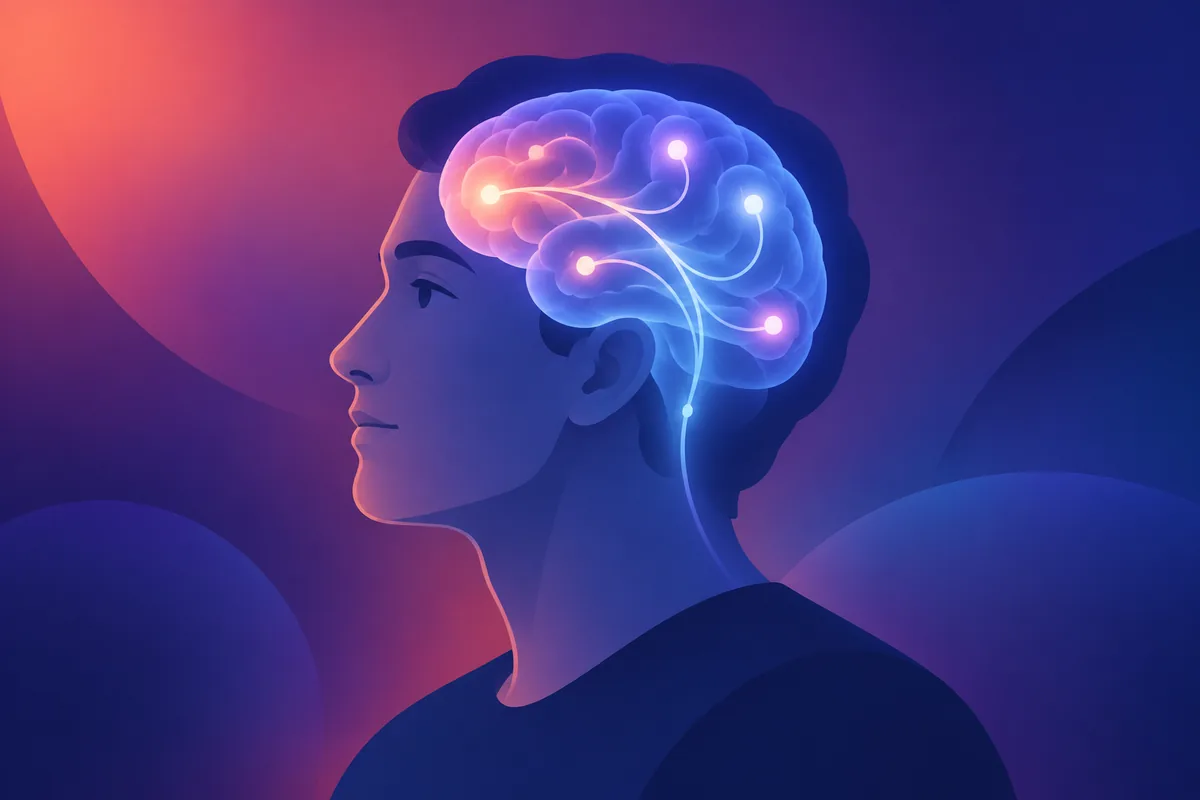
The pleasure of orgasm is processed in the brain, not just in the genitals. Scans show many regions changing activity at once, and several brain chemicals rise around the peak.
Brain areas that switch on and quiet down
Much of what is known comes from a small number of imaging studies. Researchers in Barry Komisaruk’s lab at Rutgers scanned women’s brains with fMRI as they reached orgasm. They saw activity spread widely: across areas for touch and movement, areas that link the two, and reward regions. The pattern shifted in sequence before, during and after the peak.
Whether some areas switch off is less settled. PET studies by Georgiadis and colleagues reported that parts of the frontal and temporal cortex quieted at orgasm. If that drop is real, it might fit the sense of letting go that many people describe. The Rutgers team looked for that drop and did not find it.
One curious result came from the same lab. Simply imagining genital touch was enough to activate the brain’s genital sensory area.
Dopamine, oxytocin and prolactin
Three chemicals come up again and again. Dopamine is linked to reward, and oxytocin is sometimes nicknamed the love hormone. Cleveland Clinic says both are released during orgasm and may help lift mood. Exactly how much each one shapes how orgasm feels is not well measured in people, so treat claims that one hormone “causes” bonding or calm as simplified.
Prolactin rises around ejaculation in men. For years it was blamed for the wait before another erection. A mouse study from the Champalimaud Foundation challenged that idea, which the section on the refractory period covers below. What the prolactin rise actually does in people is still unclear.
What brain scans can and cannot tell us
Brain imaging of orgasm is hard to do well. The two main methods, fMRI and PET, have disagreed about the same regions. The studies also differed in setup, with self-touch in some and partner touch in others.
A scan shows where blood flow or activity changes. It does not show what a person feels, or why. Treat a headline about the brain “shutting down” during orgasm as one finding from one method, not a settled fact.
Ejaculation vs orgasm: two separate events
Ejaculation and orgasm usually arrive together in people with penises, but they are two different events. Orgasm is the peak of pleasure and the muscle contractions. Ejaculation is the release of a small amount of semen. A typical amount is only a few millilitres, roughly a teaspoon.
Because they are separate, one can happen without the other. The International Society for Sexual Medicine (ISSM) describes a “dry orgasm” as reaching climax without releasing semen. Most men who have one still feel pleasure.
A dry orgasm has several possible causes. Several orgasms close together can use up semen for a while, and the supply comes back within a day or so. Surgery that removes the prostate and seminal vesicles takes away the organs that make seminal fluid. Some prostate treatments, nerve damage from diabetes and certain medications can send semen backward into the bladder instead. A dry orgasm is usually harmless, but it can matter for anyone trying to conceive, so it is worth raising with a doctor.
People with vulvas can release fluid too, and it can come from more than one place:
- Vaginal lubrication. Wetness before and during orgasm comes from the vaginal walls. It is common and builds with arousal.
- Female ejaculation, in the narrow sense. A small amount of thick, milky fluid from the Skene’s glands, which sit beside the urethra and resemble a small prostate.
- Squirting. A larger, watery gush from the urethra. The International Society for Sexual Medicine (ISSM) and a small ultrasound and lab study by Salama and colleagues found that this fluid comes mostly from the bladder and contains urea, sometimes with gland fluid mixed in. So it is not simply urine, but it is not free of urine either.
- Urinary incontinence. Leaking urine during sex, or at other times, without the build-up above is a separate thing. It is common and often treatable, for example with pelvic floor therapy, so it is worth raising with a doctor.
How many people release fluid at orgasm is hard to pin down, because studies define and ask about it differently. Brown University’s figure of about 10 percent of people with vulvas is one estimate, not a fixed rate. Releasing fluid is normal, and so is not releasing it.
After the peak: the refractory period and why orgasms differ
After the last contraction, the body winds down. Swollen tissue shrinks back, the genitals can feel too sensitive to touch, and many people feel relaxed or sleepy. For some, a refractory period follows.

How long the refractory period lasts
The refractory period is a stretch after orgasm when the body does not respond to sexual stimulation. It is well documented in men, and its length varies widely, from a few minutes to 24 hours or longer. It tends to get longer with age.
Many people with vulvas do not seem to have a physical refractory period. Citing the ISSM, Medical News Today says most can have multiple orgasms, though one often-quoted estimate is that only about 15% do. Survey figures like this vary, and others need a break, which is also normal.
The cause of the male refractory period is not settled. The popular explanation blames prolactin, a hormone released around ejaculation. In a study on mice, Champalimaud Foundation scientists raised prolactin to mating levels and saw no drop in sexual behaviour. Mice without prolactin did not recover any faster either. Mice are not men, but the result weakens the idea that a single hormone sets the timer.
Why orgasms differ between people and occasions
No two orgasms are quite the same, even for one person. Some are mild and some are strong; some come quickly and others take much longer. Estimates of length vary with what is measured. Medical News Today gives about 20 to 35 seconds for female orgasms and 10 to 60 seconds in general.
How orgasm is reached also differs. Many women reach it most easily through direct clitoral stimulation rather than penetration. For some, orgasm is not even needed for sex to feel satisfying.
First time orgasming can be confusing. Basson noted that many women remember worrying, during their first orgasms, that they might pass urine. If you are trying to work out whether what you felt was an orgasm, see what an orgasm feels like.
When orgasm does not happen the way you expect
Trouble reaching orgasm is common, and it is treatable. The ISSM defines anorgasmia as not reaching orgasm within a time that feels right to you, or not at all, even when the body is aroused. It affects people of every gender.
The causes are often a mix. Past sexual trauma, negative messages about sex and a lack of privacy can all play a part. Physical causes include heavy drinking or drug use, physical disabilities that affect movement, such as Parkinson’s disease, and attention problems such as ADHD. The side effects of some medicines can also play a part. Cleveland Clinic adds hormone imbalances and poor physical or mental health to that list. Orgasm problems can also follow other sexual difficulties, such as low desire, erection or lubrication problems, or pain during sex.
It helps to know that some people never have orgasms, and sex can still be close and enjoyable without one. The ISSM notes that partners may worry they are the problem. Talking it through together can ease that worry for both people.
A doctor is a good first step if it bothers you, ideally one who works in sexual health. A change in medication sometimes helps on its own. For practical, non-medical approaches, see how to have an orgasm. After-effects such as headaches or low mood have their own page on orgasm benefits and side effects.
Frequently asked questions
Does a woman release anything when she comes?
Often, yes. The vagina usually becomes wetter before and during orgasm. Some women also release fluid from the urethra, and researchers separate two kinds: a small amount of milky fluid from the Skene’s glands (female ejaculation) and a larger, watery gush (squirting), which small studies found comes mostly from the bladder. Estimates of how common either is vary widely between studies. Releasing fluid and not releasing it are both normal.
How long does an orgasm last?
Usually seconds rather than minutes. Cleveland Clinic says the peak lasts a few seconds. Medical News Today gives longer figures, about 20 to 35 seconds for female orgasms and 10 to 60 seconds overall. The gap probably reflects what is being timed: the main contractions, or the whole felt peak.
Why do moods change after orgasm?
Often the change is simple relaxation. Endorphins released at orgasm can leave people sleepy, calm and content. Some people feel low or upset after sex instead, which researchers call postcoital dysphoria. In one survey of 230 female students, 46 percent had felt it at least once. An earlier survey found 32.9%. Both studies surveyed young women, so these figures may not apply to men or to older adults.
What is a female orgasm like?
Descriptions vary. Common ones include a build-up of tension, a peak of intense pleasure, pulsing contractions and then a sense of release, often with warmth or faster breathing. Some orgasms are mild and some are strong. For a fuller answer, see what an orgasm feels like.
What is another word for orgasm?
Climax is the most common orgasm synonym in plain English. People also say coming, or “the big O”. In medical writing, the orgasm phase is the third stage of the sexual response cycle.
Putting the body and brain together
So how do orgasms work? Arousal builds blood flow and muscle tension, and orgasm releases it in a few seconds of rhythmic contractions. The heart and lungs peak, the skin may flush, and the brain lights up across sensory, movement and reward areas. Then the body settles, sometimes with a pause before it can respond again.
Much of this is well measured, like the timing of the contractions. Other parts, such as what each brain chemical does, are still open questions. Bodies also differ more than any single model suggests, and that range is normal.
To go further, read about what an orgasm feels like, the evidence on orgasm benefits and side effects, or practical guidance on how to have an orgasm.
Related reading
- What Does an Orgasm Feel Like? Signs and Why It Varies
- How to Have an Orgasm: Learning Alone, With a Partner, and What Gets in the Way
- Benefits of Orgasm and Its Side Effects: What the Evidence Says
Sources
- What is an Orgasm? Types & Health Benefits - Cleveland Clinic
- Sexual Response Cycle: Order, Phases & What To Know - Cleveland Clinic
- The Female Sexual Response: A Different Model - Journal of Sex & Marital Therapy (Rosemary Basson)
- Orgasm - Brown University BWell Health Promotion
- Is sex exercise? And is it hard on the heart? - Harvard Health Publishing
- Orgasms - Planned Parenthood
- Genital stimulation, imagery, and orgasm in women - Rutgers University (Nan Wise, doctoral dissertation; chair Barry Komisaruk)
- Why do males have to wait for “round 2”? The reason may be different from what we think. - Champalimaud Foundation
- What is a dry orgasm? - International Society for Sexual Medicine
- The refractory period: What to know, and can you shorten it? - Medical News Today
- Orgasm: What is it, what does it feel like, and more - Medical News Today
- What is anorgasmia (a.k.a. orgasmic disorder)? - International Society for Sexual Medicine
- Postcoital dysphoria: Prevalence and psychological correlates - Sexual Medicine (Schweitzer, O’Brien and Burri), via QUT ePrints
- The prevalence and correlates of postcoital dysphoria in women - QUT ePrints (Queensland University of Technology)
- Do women ejaculate? - International Society for Sexual Medicine
- Nature and Origin of “Squirting” in Female Sexuality - The Journal of Sexual Medicine (Salama and colleagues, 2015)