Doggy Style Position: Setup, Variations and How to Stay Comfortable
How the doggy style position works, how variations like standing doggy and reverse doggy style differ, and how to protect knees, wrists and backs.

General education, not medical advice. If something here worries you, talk with a clinician.
Table of Contents
The doggy style position is a rear entry position. The receiving partner is on hands and knees, and the other partner kneels or stands behind them. It is simple to start, and it changes easily. A pillow, the edge of the bed or a lower chest can turn it into a different position with a different effort level and depth.
This guide is about those changes. It compares the main variations in one table, then goes joint by joint through knees, wrists, the lower back and height gaps. It also covers why rear entry can feel deep, what helps when it hurts, and what changes for anal sex. Names like reverse doggy style and froggy style are slang, so the guide says plainly where sources disagree.
What is doggy style? The basic rear entry position
Who goes where
Doggy style is sex from behind. WebMD describes the classic form as the receiving partner on hands and knees, with the penetrating partner kneeling or standing behind. Trojan’s guide gives the same basic shape and adds that there are plenty of variations. Cosmopolitan’s version of the classic is the receiving partner on all fours with the other partner entering from behind.
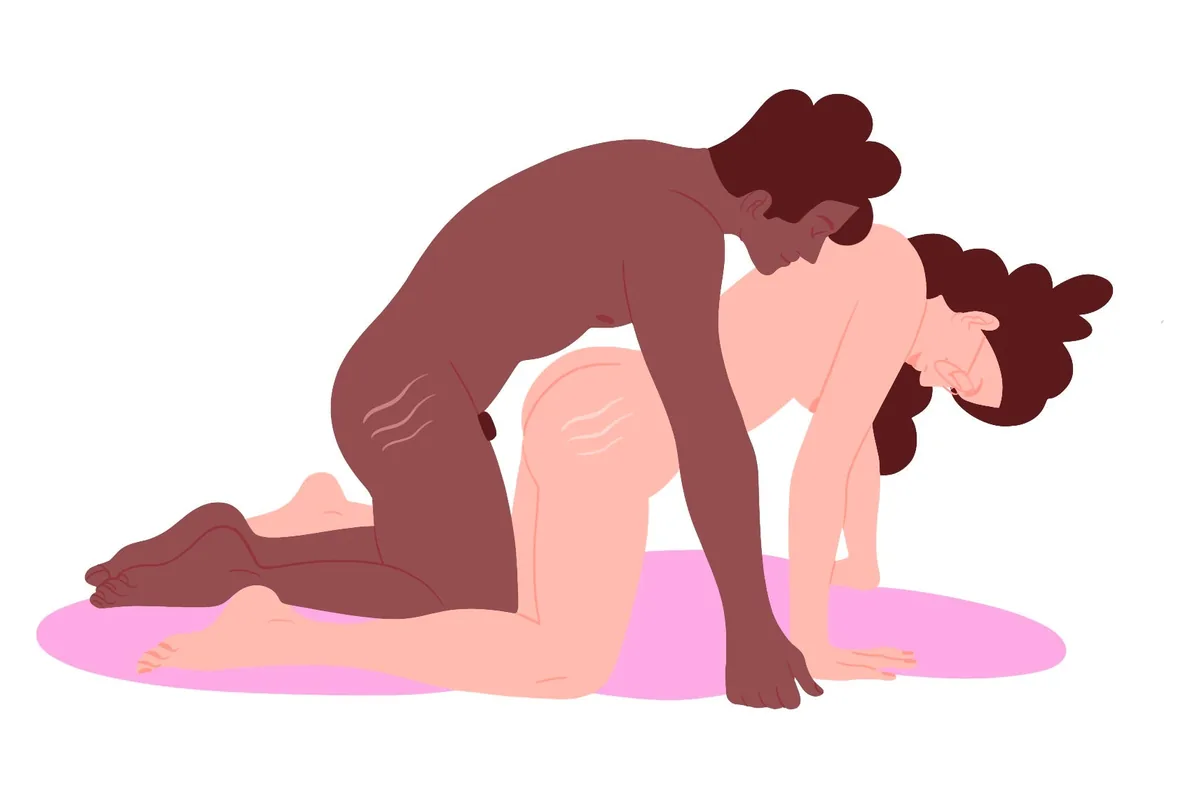
The position works for vaginal or anal sex, with a penis or a sex toy. Both partners face the same way, so neither sees the other’s face. That one detail shapes a lot of the advice later in this guide.
You will see it called the doggy position, the doggy sex position, a rear entry position or simply a sexual position from behind. Trojan notes that “backshots” is slang for it. The same guide treats prone bone, where the receiving partner lies flat on the stomach, as one of its variations. Beyond the hands-and-knees starting point, there is no official definition, and the named variations drift from site to site.
Why it is one of the most-used positions
The best-known popularity figure comes from a commercial poll, not from research. In a 2017 poll by the online doctor service Dr Ed, 2,000 people in the UK, the US and Europe picked their favourite position. Doggy style came first with 35.1%, ahead of missionary at 22.5% and cowgirl at 19.4%. That was not a scientific sample, so treat the ranking as a rough signal rather than a fact about everyone.
The reasons people give are more consistent. Therapist April Maria told Cosmopolitan that the angle is what makes it a favourite, because it reaches the upper wall of the vagina, or the prostate, more precisely. WebMD makes a similar point about the G-spot area on the front vaginal wall.
Control matters too. In a nationally representative survey of 3017 US women, 87.5% said they had adjusted their hip height or rotation to make penetration feel better. On hands and knees, the receiving partner’s hips are free to make exactly those small shifts.
Doggy style variations compared
Seven versions side by side
Each version changes one main thing: how high the chest sits, how flat the receiving partner lies, or who stands. The table compares the common versions by what changes, how much effort they take, and who they tend to suit.
| Version | What changes | Effort | Who it tends to suit |
|---|---|---|---|
| Classic | Receiving partner on hands and knees, partner kneeling behind | Moderate; wrists and knees carry the weight | First tries, and couples who want room to adjust |
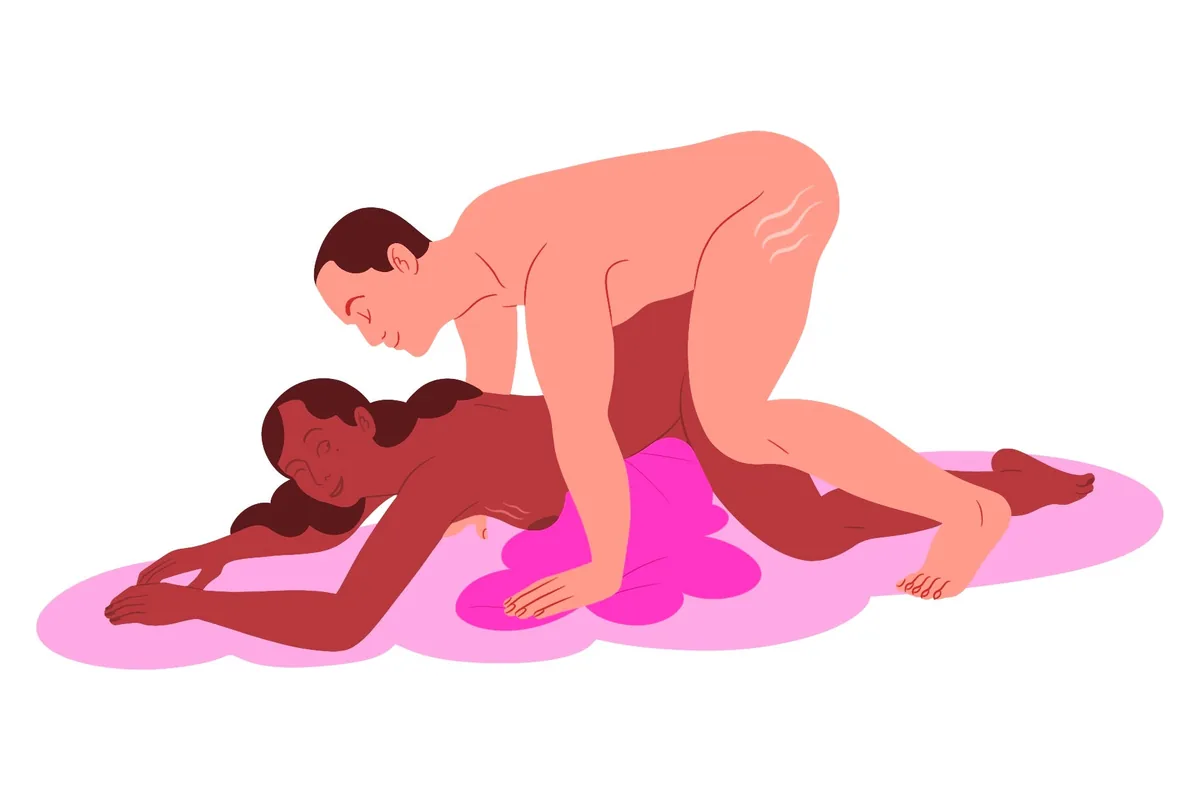
| Lowered chest (collapse doggy, downward dog) | Receiving partner drops to the forearms or a pillow while the hips stay up | Less wrist work, more load on shoulders and neck | Tired wrists; often feels deeper |
| Flat, or face down | Receiving partner lies on the stomach; partner above holds their own weight | Low for the person underneath | Often shallower when the legs stay together and nothing lifts the hips; low energy days; see the flat and lying-down guide |
| Standing with furniture | Receiving partner bends over a bed, desk or chair; partner stands | Leg and balance work for the standing partner | Sore knees, if the furniture height fits the person behind |
| Edge of the bed | Receiving partner stays on the bed with hips near the edge; partner stands on the floor | Moderate; the partner behind stands or kneels on the floor | Height gaps and the back partner’s knees; see the edge-of-bed guide |
| Standing doggy position | Both stand while the receiving partner leans on a wall or counter | Highest balance demand | Partners of a similar height |
| Reverse doggy style | No fixed meaning; one use is an away-facing straddle with one partner on their back | Depends on the setup | Couples who agree on the shape first |
Pillows are the quickest adjustment in any row. Sex expert Jess O’Reilly, quoted by Cosmopolitan, suggests using pillows to prop the receiving partner up, which changes both the angle and the comfort. Blushcast’s advice is to add one support at a time, because changing two heights at once makes it hard to tell which one helped.
As a rough rule, a flatter body with the legs together tends to mean less depth, and a lower chest with raised hips tends to mean more. A pillow under the hips can make even a flat version deep, and bodies differ, so treat this as a starting point rather than a fixed ranking.
Names that mean different things
Reverse doggy style is the clearest example of a name without a fixed shape. The retailer Domlust says plainly that it is not a standardized name. One setup it describes is not kneeling at all: one partner lies on their back while the other sits astride facing their feet. That is much closer to reverse cowgirl than to anything on hands and knees.
The “Bulldog” is another split. Blushcast uses the name for a version where the partner behind squats instead of kneeling. Cosmopolitan uses it for the receiving partner down on the forearms with the other partner standing or crouching. Same name, two different bodies doing the work.
Froggy style and the collapse doggy sex position overlap as well. Blushcast groups froggy style with leapfrog, where the chest is lower and the hips stay raised. Domlust describes collapsed doggy in almost the same words and says the downward dog sex position label is used for elevated hips in some guides, with setups that vary. So before trying any named version, describe the shape in plain words instead of relying on the label.
Comfort by body part: knees, wrists, back and height
Knees
Knees usually complain first, because the receiving partner’s weight sits on them the whole time. A folded blanket or a dense pad works better than a thin throw. Blushcast also points out that a very soft mattress can let the knees sink while the hips twist, so a firmer surface may feel better. On a hard floor, a pillow or blanket under the knees is the minimum.
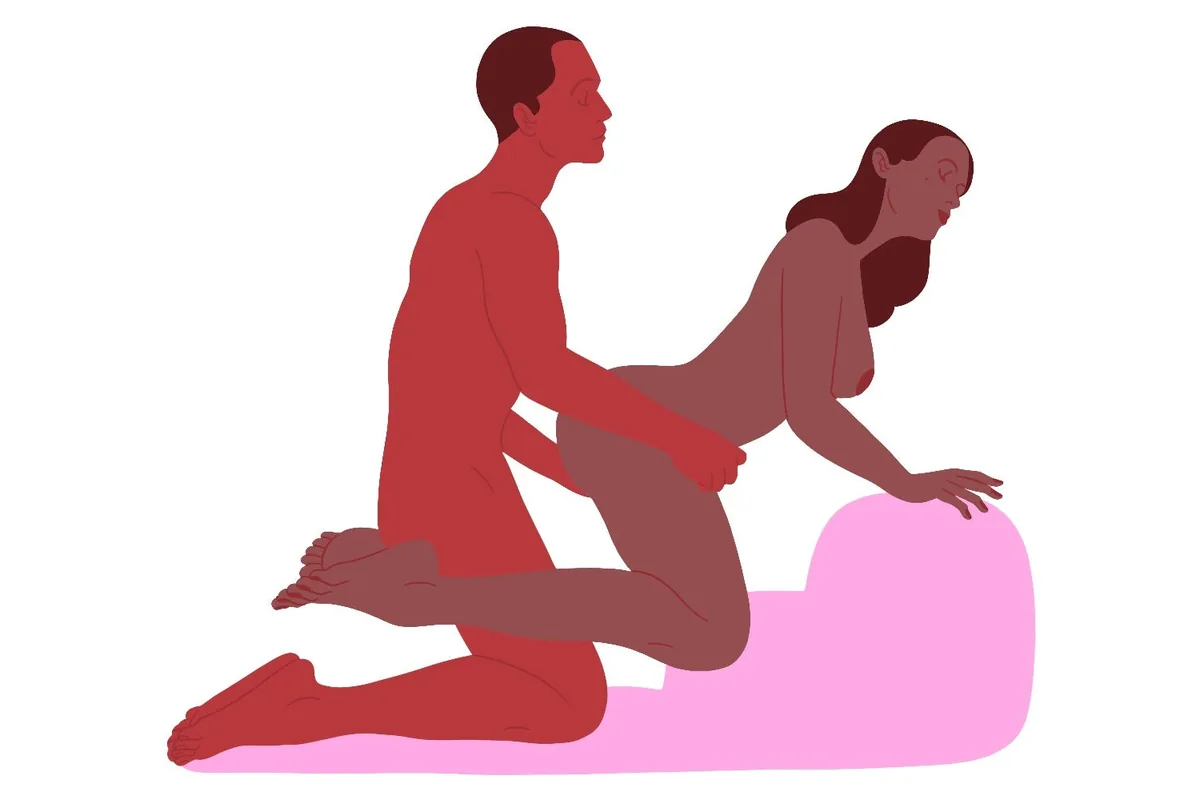
Wedge pillows are another option. Healthline’s guide for people with limited mobility notes they can support the knees and hips, which takes strain off sore joints. If padding still is not enough, take the receiving partner off their knees. They can stand and bend over a chair or desk at a good height, or lie down in the flat version. The edge of the bed solves a different problem: it spares the knees of the partner behind, who stands on the floor.
Wrists and shoulders
On all fours, the hands hold up the whole upper body. Dropping to the forearms takes that weight off the wrists. The trade-off, Blushcast warns, is extra load on the shoulders and neck, and the lower chest can make penetration deeper.
A firm pillow under the chest cuts the arm work further. It is also the easiest fix for someone who gets tired quickly. Tingling, numbness or a sharp pain in a wrist is a reason to stop and change position, not to push on.
Lower back: what the spine research found
The best evidence here comes from a small University of Waterloo study. Researchers used motion capture to track the spines of 10 healthy couples across 5 positions. Two of those were kneeling rear-entry versions, one with the receiving partner on the elbows and one on the hands.
Every couple in the study was healthy, so the results are the authors’ recommendations rather than outcomes in patients. For men whose back pain gets worse when they bend forward, those recommendations ranked both rear-entry versions as the most spine-sparing positions tested. That result went against the usual advice to lie side by side, which the authors noted. The findings had limits, though. The version on the hands was a poor fit for men whose pain flares when they arch backward. For men whose pain is set off by any spine movement, no position was recommended; the authors suggested moving from the hips instead.
The study reported spine data only for the penetrating men. It says nothing direct about the receiving partner’s back. For that person, Blushcast suggests returning to a neutral spine, lowering the hips a little and removing any thick pillow from under them. A deep, forced arch is never a requirement.
Height differences
Height gaps matter most when both partners kneel. A big difference in thigh or torso length puts the two sets of hips at different heights. The fixes are simple: pillows under the shorter partner’s knees, a move to the bed edge, or one partner standing.
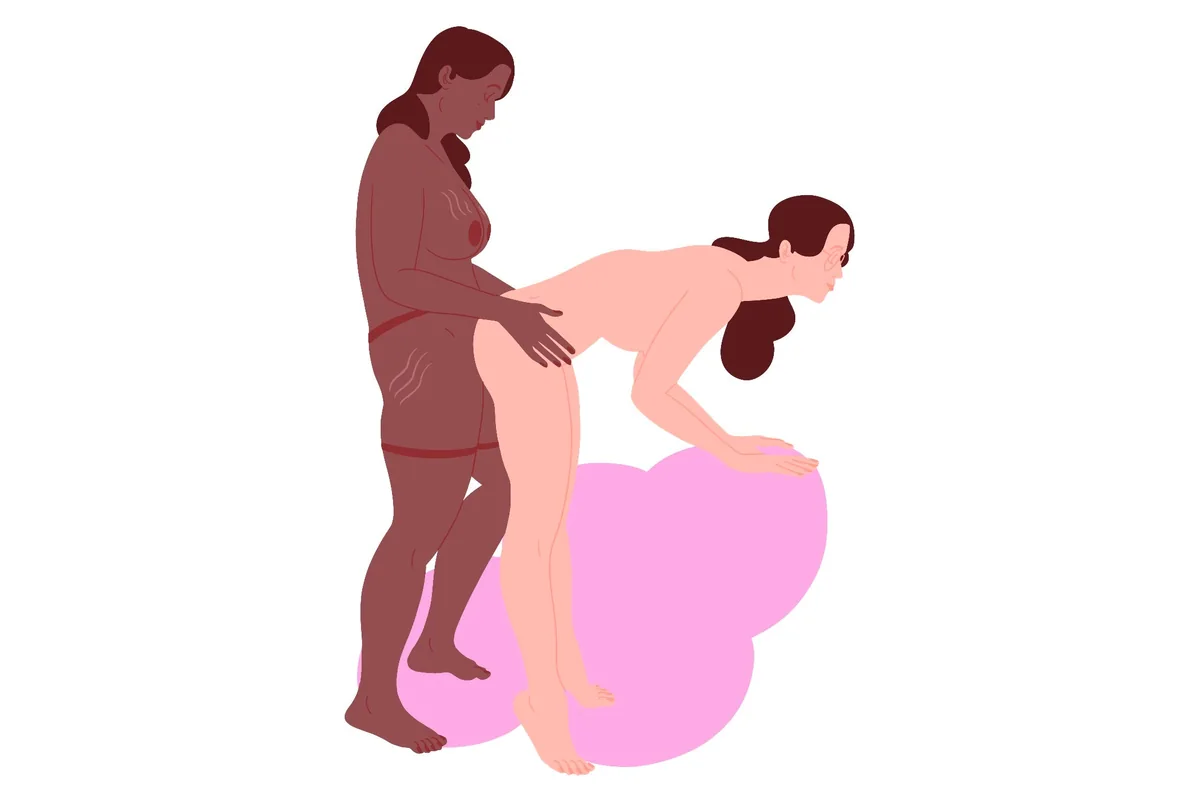
Furniture is the most flexible tool. WebMD suggests choosing a chair or desk at a good height for the person behind. The fully standing version is easiest when the two partners are of a similar height. When they are not, a bed edge usually beats trying to stand.
Depth: why rear entry can feel deep and how to change it
Why the angle goes deeper
This position can feel deep because of how the receiving partner’s pelvis tilts. When the chest drops and the hips stay up, Blushcast explains, the entry path becomes more direct and depth may increase. Sexologist Suzannah Weiss told Cosmopolitan that bending over a bed with the partner standing can allow deeper penetration still.
Some people like that depth. Others find it hurts. Cleveland Clinic describes deep pain during penetration, called collision dyspareunia, and says it may feel worse in certain positions.
How to make it shallower
The simplest change is to lie flatter, with no pillow lifting the hips. WebMD notes that lying flat on the stomach can keep penetration from going too deep. Sex educator Gigi Engle recommends the flat version for exactly that reason. Bringing the knees and thighs closer together also limits range, although it adds friction, so extra lubricant helps.
How you move matters as much as the shape. In the national survey of US women mentioned earlier, 83.8% had used shallow penetration just inside the entrance to make sex more pleasurable. Also, 76.4% had used rocking, which means staying fully inside and rocking instead of thrusting in and out. Shallow penetration is the one that keeps depth low. Rocking does not reduce depth, but it swaps hard strokes for gentler movement, which some people find easier on deep tissue.
It also helps to let the receiving partner set the depth. They can move back toward their partner or forward and away, and they can feel the limit far better than the person behind can guess it.
Deep pain, endometriosis and when to see a doctor
Deep pain has causes worth knowing about. Cleveland Clinic lists bladder or bowel conditions, pelvic floor dysfunction, endometriosis and pelvic congestion syndrome. Endometriosis is a condition where tissue like the lining of the uterus grows outside it.
Endometriosis research singles this position out. In a study of 71 women having surgery for endometriosis, 68.3% had pain only in certain positions, and doggy style was named the most painful. The Sexual Medicine Society of North America (SMSNA) explains that rear entry can push the uterus forward, so where the tissue sits may decide which positions hurt. It suggests front-entry positions may hurt less, but the sample was too small to recommend any one position.
Painful sex is common, and it is treatable. Up to 28% of people in the US will have it at least once, according to Cleveland Clinic. Book an appointment if pain keeps coming back, shows up in other positions too, or comes with bleeding. A provider can look for the cause and treat it, for example with physical therapy for pelvic floor problems.
When you cannot see each other’s faces
Facing away means you lose each other’s expressions, so agree on signals before you start. Pick words for slower, shallower and stop. Some couples add a touch signal, like a tap on the thigh, which still works when talking feels awkward.
WebMD suggests saying out loud what feels good, or showing it through sound and movement. A mirror lets you keep eye contact if you want it. Not everyone does. Suzannah Weiss told Cosmopolitan that some people feel less self-conscious when they are not being looked at.
Short questions are easiest to answer mid-movement: “Same depth?” or “Want to switch?” If an answer is slow to come, pause. And when either person says stop, movement stops right away.
Vaginal and anal sex from behind: what changes
The position is the same for vaginal and anal sex, but the preparation is not. WebMD explains that the lining of the anus is thinner than the vagina and makes no lubrication of its own. That makes it tear more easily, and small tears let infections in. Use a condom and plenty of lubricant. Water-based and silicone-based lubes are both safe with latex condoms, while oil-based products can weaken latex. Silicone lube lasts longer, which helps for anal sex, but it can damage silicone toys.
Lube helps with vaginal sex too. It cuts friction, and using a water- or silicone-based one with latex condoms lowers the chance of a condom breaking.
Moving from one to the other is easy from behind, and that is where people slip up. Change to a fresh condom before going from anal to vaginal sex. Bacteria from the anus can cause urinary tract infections and bacterial vaginosis if they reach the vagina.
One rare injury deserves a mention. A penile fracture can happen when the penis slips out and bends hard against the partner’s body. In one study of 90 men with this injury, SMSNA reports that 41% were hurt during doggy style. Guiding the penis back by hand, rather than thrusting toward an opening you cannot see, lowers the risk. A cracking sound with a sudden loss of erection means going to an emergency room. The reverse cowgirl guide covers warning signs and what to do in more detail.
Doggy style FAQ
Why do I bleed after a doggy position?
Bleeding after sex is not something to ignore, says GP Dr Katrina Smith of Spire Healthcare. Causes include infections, small tears, polyps on the cervix or in the uterus, and, less often, cancer. Dryness and starting before you are fully aroused raise the risk through friction, so lubrication helps. A position change will not fix the cause, so see a doctor if it happens.
Why does my stomach hurt in doggy?
Pain felt low in the belly during rear entry is often deep pain from contact high in the vagina. Cleveland Clinic calls this collision dyspareunia and says it can be worse in certain positions. Endometriosis is one known cause, and rear entry was the most painful position in one endometriosis study. Try a flatter version first. If the pain keeps returning, get checked.
Can I get pregnant with a doggy position?
Yes. Shady Grove Fertility says no studies show that any one position changes the chance of pregnancy. That cuts both ways: rear entry does not help you conceive, and it does not protect you either. Even anal sex carries a small chance if semen gets near the vaginal opening. If you do not want a pregnancy, use contraception as usual.
Is the doggy sex position safe during pregnancy?
The NHS pregnancy advice does not name rear entry; it focuses on what feels comfortable. It notes that partner-on-top positions often become uncomfortable as the bump grows, and suggests trying others, such as side by side. A pillow under the belly or knees can help in a kneeling version. Water-based lube eases dryness, and you may be told to avoid penetrative sex in some cases, such as heavy bleeding.
What if you don’t enjoy it?
Then skip it. No one has to like a position. If you want rear entry with less effort and more closeness, spooning has both partners lying on their sides facing the same way. WebMD says many people find it more comfortable. Face-to-face options like missionary suit people who miss eye contact.
Choosing the version that fits your body
Start with the classic hands-and-knees shape and change one thing at a time. Sore knees for the receiving partner point to bending over furniture or a flat version; sore knees for the partner behind point to the bed edge. Tired wrists point to the forearms or a pillow under the chest. A big height gap points to furniture rather than kneeling.
Depth is a setting the receiving partner controls. Lying flatter, keeping the thighs together and staying shallow all bring it down, and rocking instead of thrusting softens the impact. For anal sex, use more lube and a condom, and change condoms before switching.
Deep pain that keeps coming back, pain in other positions, or bleeding after sex is worth a doctor’s visit. It is not something to push through. And if the doggy style position never feels right, a side-lying or face-to-face position is a perfectly good answer.
Related reading
- Prone Bone Position, Speed Bump and Dragon: Low-Effort Lying-Down Sex Positions
- Edge of Bed Sex Positions: Height Setup, Butterfly, T-Bone and More
- Spooning Sex: Setup, Back Pain Research and Pregnancy
Sources
- What Is Doggy Style? Sexual Positions, Safety, and Tips - WebMD
- All About Doggy Style Sex: Tips for Giving & Receiving Backshots - Trojan
- 10 Doggy Style Sex Positions and How to Make It Feel Amazing - Cosmopolitan
- Survey Reveals The Most Popular Sex Position - Marvin
- Women’s techniques for making vaginal penetration more pleasurable: Results from a nationally representative study of adult women in the United States - PLOS ONE (Hensel et al., via PubMed Central)
- Doggy Style Positions: 10 Variations Compared - Blushcast
- Doggy Style Sex Position: Complete Guide - Domlust
- Ask Gigi: What Is The Flat Doggy Style Sex Position? - Gigi Engle
- 12 Best Sex Positions for People Who Have Limited Mobility - Healthline
- Male Spine Motion During Coitus: Implications for the Low Back Pain Patient - Spine (Sidorkewicz and McGill, University of Waterloo, via PubMed Central)
- Dyspareunia (Painful Intercourse): Causes & Treatment - Cleveland Clinic
- Painful Sex Positions for Endometriosis Patients - Sexual Medicine Society of North America (SMSNA)
- Anal Sex: Safety, Health Concerns, and Tips - WebMD
- What Are the Risk Factors for Penile Fracture? - Sexual Medicine Society of North America (SMSNA)
- Bleeding after sex: is it normal and what could it mean? - Spire Healthcare (Dr Katrina Smith)
- Fertility Facts: No best sex position to conceive a baby - Shady Grove Fertility
- Sex in pregnancy - NHS