What Is the Jackhammer Position? Pace, Setup and Safety
What is the jackhammer sex position? The name covers a fast pace and a raised-hips pose. Learn how each works, what intensity does to bodies, and safer options.

General education, not medical advice. If something here worries you, talk with a clinician.
Table of Contents
The jackhammer position is slang, and people use the name for two different things. Most often it describes a pace: fast, pounding thrusting with little change in speed, depth or intensity, which MEL Magazine notes is also called jackrabbit sex. Position guides use it for something more specific. WebMD treats the jackhammer as another name for the piledriver, an advanced pose where the receiving partner lies back with hips and legs raised high.
Both versions can be fun for people who want intensity. Both also push bodies harder than ordinary sex does. This guide sets the two meanings side by side and explains what speed and force do to skin, muscles and pelvic organs. Then it covers practical ways to get that intensity with less risk. It closes with the signs that pain after sex needs a doctor.
Jackhammer sex as a pace vs. the jackhammer position
The quickest answer is that jackhammer sex can be a speed or a shape, and sometimes both at once. In everyday slang, the word describes a very aggressive style with long strokes at a fast tempo. In position guides, the jackhammer sex position is a folded, raised-hips pose that works for vaginal or anal sex.
| Jackhammer as a pace | Jackhammer as a position | |
|---|---|---|
| What it describes | Fast, pounding thrusting with little change in speed, depth or intensity | Receiver on their back, hips lifted, legs raised back toward the head; giver above in a squat or straddle |
| Where it happens | In any position, because it is about tempo | One specific setup, also called the piledriver |
| Who moves | The penetrating partner sets and keeps the speed | The giver controls speed, depth and rhythm from above |
| What it asks of the receiver | Enough arousal and lubrication first; many people find it painful without them | Flexibility and abdominal strength to hold the fold |
| What it asks of the giver | Attention to how the partner is responding, and asking instead of assuming | Core and leg strength, balance, and care with the thrusting angle |
The two meanings overlap more than the table suggests. A couple can use the raised-hips position at a slow pace, or use a jackhammer pace in an ordinary position. Spelled jack hammer or jackhammer, the term carries both senses, and that is why it causes misunderstandings. One partner may hear “faster”, while the other pictures a pose that needs real flexibility.
Opinions on the pace are split. Many women interviewed by MEL said it hurt or did nothing for them, while others enjoyed it after plenty of foreplay. Sex educator Kate Sloan told the magazine that most good sex has rises and dips in sensation, and that partners should ask instead of assuming.
How the raised-hips jackhammer position works
Where each partner’s body goes
The receiving partner starts flat on their back, as in the missionary position. They then lift their legs slowly from the thighs until the hips and lower back come off the bed. Some people support their lower back with their hands, a bit like an ab exercise, so the legs can travel back over the head. The giving partner straddles or squats above and leans forward to find a workable angle, bending the knees for balance.
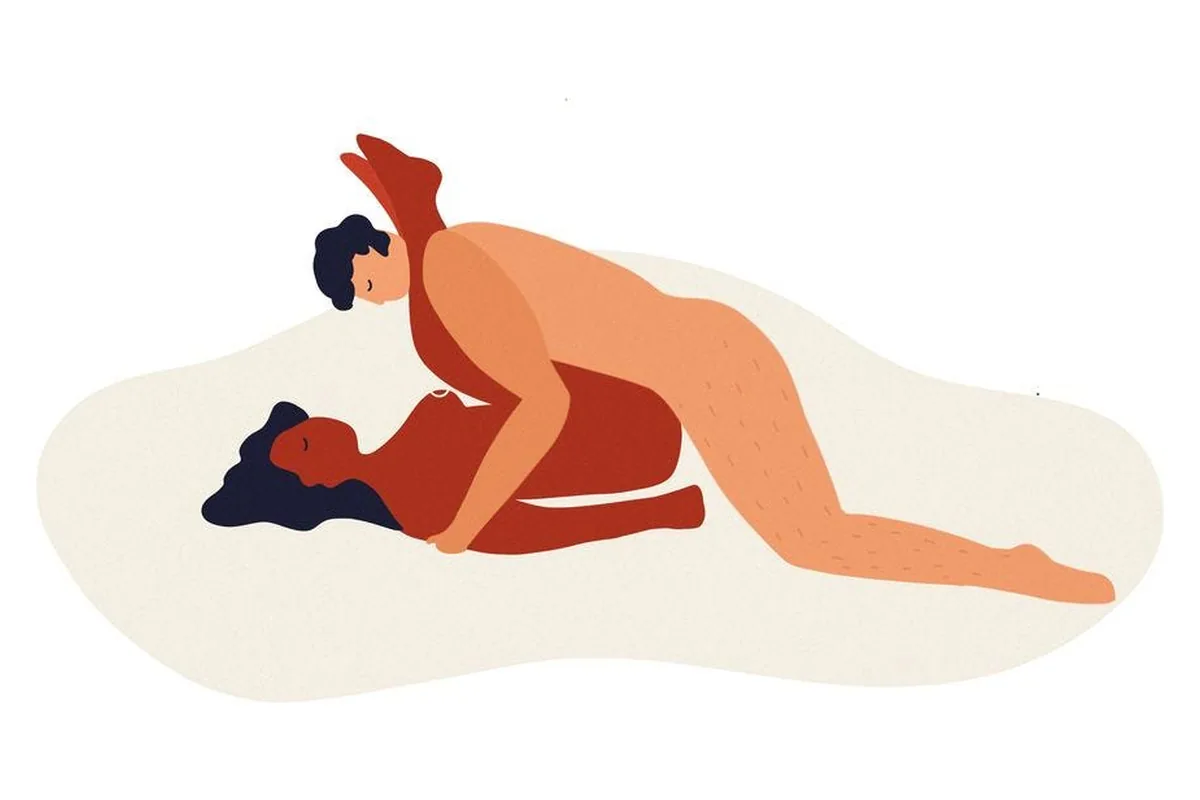
So the shape is missionary folded much further. The receiver’s weight shifts onto the upper back, shoulders and neck, and the giver ends up working from above instead of lying alongside.
Who carries the load
WebMD calls this an advanced position that takes flexibility, endurance, and core and leg strength from both people. The receiver’s abdominal muscles hold the fold. Their legs are also above their head, which sends blood toward it. WebMD says that if too much blood rushes there the receiver can pass out, so they should speak up and change position first.
The giver’s thighs and balance do most of their work. Spicerack suggests the giver rest their hands on the receiver’s legs, which helps hold the receiver in place and also takes some of the giver’s own weight. Both partners depend on each other to stay steady, and either one can tip out of the position. WebMD also advises anyone with a weak or bad back to skip it. It adds that the giver may be more prone to penile fracture depending on the angle. In this pose, steady and controlled thrusting matters more than speed.
Setup that takes strain off
Go into the fold slowly. WebMD suggests hip-opening stretches beforehand and moving into the position gradually to avoid strains. It also notes there is little eye contact, so agree in advance how the receiver will signal discomfort.
Gentler versions keep the angle without the full fold. The receiver can spread the legs wide instead of raising them overhead. Another option is pulling the knees toward the chest while the giver steadies their shins. Spicerack also suggests a positioning wedge for support and a steadier angle. A firm pillow under the hips is the low-cost version, and it lifts the pelvis without asking the neck to carry the fold.
What speed and force change in the body
Friction and lubrication
Fast, hard thrusting means more rubbing over the same tissue in less time, and that rubbing is where fast sex often starts to hurt. An Australian sexual health service puts the baseline plainly: even very vigorous sex with lots of friction should not actually hurt. When it does, the usual reasons are too little lubrication or tense vaginal muscles. Both often mean the receiver was not fully aroused, or was anxious.
Painful sex is common enough that nobody should feel odd raising it. Cleveland Clinic says it affects 3 out of 4 women at some point, and up to 28% of all people in the United States at least once. The same page names low lubrication as a common cause and recommends a water- or silicone-based lubricant when dryness is the problem. At a jackhammer pace there is less room for arousal to catch up, so lube belongs in the setup rather than in the rescue.
Depth and deep pain
Hard thrusting can reach deeper than slower movement, depending on the angle and both bodies, and deep contact has its own kind of pain. Doctors call it deep dyspareunia: pain with deep penetration. Cleveland Clinic adds that it may feel worse in certain positions. A raised-hips fold is built for depth, so it gives that pain every chance to show up.
Several conditions make deep pain more likely. Cleveland Clinic lists endometriosis, pelvic floor dysfunction, and bladder or bowel conditions. The American Sexual Health Association adds scar tissue from past pelvic surgery and a tipped uterus. A University of British Columbia lab studied 548 women and found deep pain tracked tenderness in specific pelvic areas, such as the pelvic floor, bladder and cervix. The more tender spots someone had, the more deep pain they reported. So the same pace can feel fine to one person and sharp to another.
Soreness versus injury
Mild tiredness after energetic sex is one thing. Pain that lingers is another. The Australian service says the aftermath of sex should not hurt either, whether two minutes or two days later. Cleveland Clinic lists throbbing or aching after sex as a symptom of dyspareunia.
The sources link a few specific problems to vigorous or rough sex:
- Frenulum tears. The frenulum is the thin band of tissue under the head of the penis. A case report calls tears there relatively common but underreported during vigorous sex, and notes that a short, tight frenulum tears more easily.
- Anal tissue tears. The anus makes no lubricant of its own, and its inner lining is thin. Cleveland Clinic warns it can tear without added lube, and that rough sex can cause bleeding.
- Condom breakage. The CDC warns that oil-based products like baby oil or lotion cause condoms to break. Fast sex with too little lube adds friction, so a water- or silicone-based lube is worth keeping close.
- Penile fracture. This injury can happen when the penis slips out during aggressive thrusting and strikes the partner’s body, often with a pop and instant pain. The reverse cowgirl guide covers it in detail.
Getting jackhammer intensity more safely
Agree on the pace before you start
Start by saying which jackhammer you mean. Asking for more speed near the end is a very different request from asking to try the folded pose, and a quick word beforehand avoids a surprise halfway through. Planned Parenthood describes consent as specific, meaning a yes to one thing is not a yes to others. It is also reversible: either partner can change their mind at any time, even in the middle of sex.

Practical details help more than general promises. Agree how hard is too hard, whether depth or speed is the bigger worry, and what the receiver will do with their hands. WebMD suggests making a plan for how discomfort will be raised before trying the raised-hips version.
A stop signal that works when you are out of breath
Fast sex leaves people breathless, and a full sentence is hard to get out. A safeword is a word agreed in advance that means slow down or stop. Love and Vibes suggests traffic-light words, where green means keep going, amber means ease off and red means stop at once. Cleveland Clinic notes that a plain “no” works just as well as a special word.
Sources differ on gestures. Love and Vibes prefers a spoken word because it is less ambiguous, keeping a gesture such as a foot tap as backup. Spanksy recommends a physical signal, like repeated tapping or one firmly raised hand, for anyone who struggles to speak under pressure or pain. Both points are fair, so agree on one word and one signal, and practise the signal once before you need it. When either one comes, stop first and talk afterwards.
Build up instead of starting at full speed
Speed works best at the end of a warm-up, not the start. WebMD advises foreplay until the receiver is fully aroused and naturally lubricated, since penetration at full arousal tends to hurt less. A case report on frenulum tears gives the same advice from the other side of the bed: gradual penetration, enough foreplay and plenty of lube lower the risk.
Expect to pause. Cleveland Clinic’s advice is to stop when discomfort shows up, then carry on gently once the partner is ready. Adding more lube at that point usually helps. If the pace keeps bringing pain back, the session has given you its answer for that day.
Positions that give depth with more control
The simplest change is handing control to the receiver. WebMD suggests that if thrusting hurts, the receiving partner can move on top and set the depth themselves. The cowgirl position works this way, and the person on top can still go fast if they want.
Doggy style gives depth as well, but the receiver has less control over it. It works best at a pace the receiver has already said yes to, with the stop signal agreed first.
One honest exception exists. With a tipped uterus, WebMD notes that positions with the woman on top typically cause more pain. It adds that particularly energetic sex can injure the ligaments that support the uterus. Anyone with that diagnosis may need to test angles slowly rather than assume on-top is the safe choice.
When pain after jackhammer sex needs a doctor
Signs that need prompt care
A few signs should not be left to settle on their own:

Go to an emergency department straight away, without waiting to see whether it settles, for:
- A pop, sudden pain and a lost erection. These are signs of a possible penile fracture. The Sexual Medicine Society of North America says to seek care right away, since delay can make things worse.
- Severe or sharp pain in the rectum or belly during or after anal sex. Cleveland Clinic says sharp, shooting pain may mean a tear inside the rectum. How bad the pain is matters more than how long it has lasted.
- Heavy bleeding, or bleeding that will not stop, from the vagina, penis or anus, or any bleeding with fever, dizziness or worsening pain.
See a doctor soon, within a day or two, for smaller amounts of blood that appear some time after sex or keep coming back. Cleveland Clinic says small spots of blood right after anal sex can be normal, but blood that shows up later is worth having checked. If you are unsure which group a symptom falls into, treat it as the urgent one.
Book an appointment
Softer signs still deserve a visit. Cleveland Clinic advises contacting a provider about new or worsening pain during sex. Harvard Health says to see a doctor about any unexpected vaginal bleeding, whether it follows sex or not. Its listed causes include dryness, infections such as chlamydia, and small growths on the cervix called polyps. A frenulum that tears more than once also deserves a check, because larger or repeated tears may need stitches or a minor operation.
A family doctor or a sexual health clinic is a good first stop. They can examine you, test for infection and refer you to a gynecologist or a sexual health specialist if needed. Pain that only shows up with deep thrusting is worth describing in exactly those words. That detail points a clinician toward the deep-pain causes covered above. It can feel awkward to bring up, but Cleveland Clinic notes that providers have heard it before.
Jackhammer position FAQ
What does jackhammering mean?
Jackhammering usually means a style of sex: fast, hard thrusting that barely changes in speed, depth or intensity. MEL Magazine notes the term is used interchangeably with jackrabbit sex. Some position guides also use the name for a raised-hips pose, so it is worth asking which one a partner means before agreeing to it.
Is jackhammering bad for you?
Not by itself. Some people enjoy the intensity, especially after plenty of foreplay. The problem is pain. A sexual health service says even very vigorous sex should not hurt, and that pain usually points to too little lubrication or tense muscles. Fast, deep thrusting also raises the odds of tissue tears and condom breakage, so lube and a stop signal matter.
What is the difference between the jackhammer and the piledriver?
As positions, there often is none. WebMD treats the jackhammer as another name for the piledriver, the folded pose with the receiver’s hips and legs raised. The difference appears when people use jackhammer to mean a pace instead. A pace can happen in any position, while the piledriver is one specific setup.
Why does it hurt when my partner goes in too deep?
Pain with deep penetration has a medical name, deep dyspareunia. It can come from endometriosis, pelvic floor problems, scar tissue after surgery or a tipped uterus. Slowing down and adding lube often help, and so can letting the receiver control depth from on top. With a tipped uterus, though, WebMD says on-top positions typically cause more pain, so test angles slowly instead. If deep pain keeps coming back, describe it to a doctor in those exact terms.
Choosing your version of the jackhammer
The jackhammer is two ideas sharing one name: a fast, unvarying pace, and a folded raised-hips position also called the piledriver. Whichever version you want, say so plainly before you start. Build up to speed instead of opening with it, keep lube within reach, and agree on one word and one gesture that mean stop.
Pain is the line. Soreness that fades quickly tells you to adjust the pace or the angle next time. A pop, severe pain or heavy bleeding needs emergency care straight away, and pain that keeps returning deserves an appointment. With those habits, the jackhammer sex position becomes one option among many, used when both partners actually want it.
Related reading
- Missionary Position: Variations, Angles and Comfort
- Doggy Style Position: Setup, Variations and How to Stay Comfortable
- Reverse Cowgirl: What It Is, Angles, Comfort and Penile Safety
Sources
- Guys, It’s Time to Cool It With the Jackrabbit Sex - MEL Magazine
- Piledriver Sex Position: What It Is - WebMD
- Men: For The Love Of Our Vaginas, STOP Jackhammering Us During Sex - YourTango
- The Jackhammer - Spicerack
- Is it normal to get sore or have pain after sex? - Sexual Health and Family Planning ACT
- Dyspareunia (Painful Intercourse): Causes and Treatment - Cleveland Clinic
- Dyspareunia: When Sex Hurts - American Sexual Health Association
- Painful Sex - Where does it hurt? - Endometriosis and Pelvic Pain Laboratory, University of British Columbia
- Postcoital penile injury: Torn frenulum in an 18-year-old male - Indian Journal of Sexually Transmitted Diseases and AIDS (via PMC)
- Is Anal Sex Safe? - Cleveland Clinic
- How to Use a Condom - U.S. Centers for Disease Control and Prevention
- What Are the Risk Factors for Penile Fracture? - Sexual Medicine Society of North America
- What Is Sexual Consent? - Planned Parenthood
- How to Choose a Safeword With Your Partner - Love and Vibes
- Safewords vs Safe Signals - Spanksy
- Pain During Sex: Causes and Treatments - WebMD
- Why do I bleed after sex? - Harvard Health Publishing