The Wheelbarrow Sex Position: How It Works and Who It Suits
What is the wheelbarrow sex position? See the standing, kneeling, seated and reverse versions, what each asks of your body, and how to avoid falls.

General education, not medical advice. If something here worries you, talk with a clinician.
Table of Contents
The wheelbarrow sex position is a rear-entry position where one partner stands and holds the other partner’s legs. Meanwhile, the receiving partner balances on their hands in a plank-like position. Seen from the side, the pair resembles someone pushing a garden wheelbarrow.
It is harder than it looks, because the partner on their hands holds up their own upper body while the standing partner carries the rest. This guide walks through the main versions, from fully standing to kneeling, seated and bed-supported setups. It also covers what each one asks of wrists, shoulders, backs and knees, and how to avoid its main hazard, a fall onto the face.
The single most useful rule is to start with a supported version and work down to the floor gradually.
What is the wheelbarrow sex position?
Where the name comes from
The name has two explanations, and they fit together comfortably. One is the wheelbarrow race, the children’s game where one player walks on their hands while a teammate holds their legs and steers. The other is the shape: the partner on their hands is the wheelbarrow, and the standing partner looks like the one pushing it.

Where the guides agree and where they differ
On the basic arrangement, the guides line up: the giving partner stands and holds the receiving partner’s legs at about waist level, while the receiver balances on their hands in a plank-like position. WebMD rates the move as intermediate.
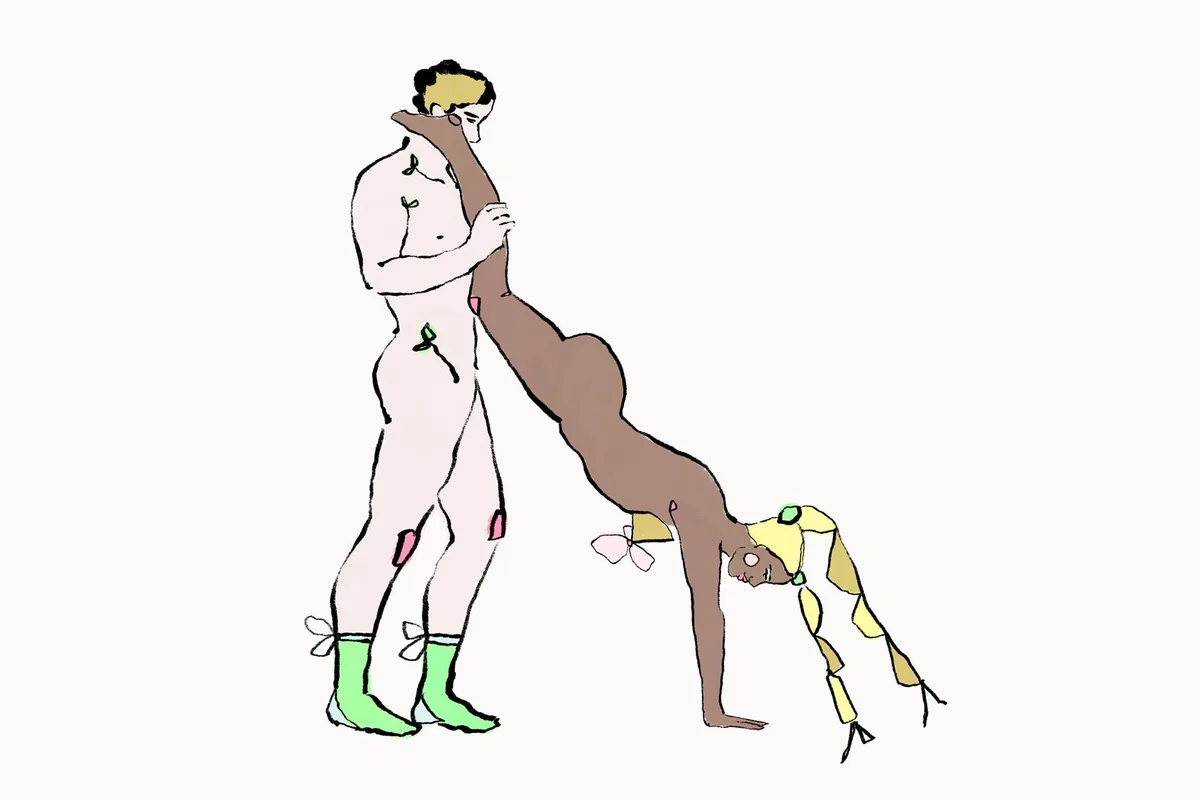
The details are where guides part ways. The standing partner can grip mid-thigh or move their hands to the waist, and the receiver’s hands can go on the floor, the bed or a prop. That last detail matters most. Some guides count a hands-on-the-bed setup as the same position, others list it as a separate supported version. We treat it as the same position, and as the best way in.
The seated and reverse versions rest on thinner evidence, since only one of the sources used here describes each of them. Treat those names as loose labels rather than fixed definitions. If a partner suggests the wheelbarrow, ask which version they have in mind.
Wheelbarrow position versions compared
Several versions turn up under the wheelbarrow name, and these are the five this guide covers. They differ mostly in how high the receiver’s hips sit and who carries the weight.
| Version | Setup | What changes | Effort | Who it suits |
|---|---|---|---|---|
| Fully standing | Receiver’s hands on the floor, giver standing and holding the legs at waist level | Full height, and the receiver holds a plank the whole time | High | Partners with strong arms and core who have tried the easier versions |
| Supported | Receiver’s hands or upper body on a stable bed edge, sofa or ottoman | Much less effort and danger, but only if the support does not rock, slide or roll | Moderate | First-timers and anyone unsure of their arm strength |
| Kneeling | Giver kneels behind, so both bodies stay lower to the ground | Less strength needed and a shorter fall, with more weight on the giver’s knees | Moderate | Couples who want the angle without the height |
| Seated | Giver sits on the edge of a bed or chair, with the receiver’s legs either side | Less strenuous, but it takes more teamwork | Low to moderate | A giver who tires holding a standing lift |
| Reverse | Receiver arches backwards, face up, with hands on the floor | A deep backbend and a stronger rush of blood to the head | Very high | Not a beginner move; flexibility alone does not make it safe |
The seated setup is sometimes called the lazy wheelbarrow, because it is less strenuous, though the giver still supports the receiver’s legs. A wanton wheelbarrow raises one of the receiver’s legs to the giver’s shoulder, which takes more flexibility.
The reverse wheelbarrow position is the outlier. The one description used here comes from a position-library site, and it is closer to a supported backbend than to the original shape. Most couples can skip it.
The table is not a ladder, and nobody needs to end up at the fully standing version. Pick the row that suits your bodies on the day. If you are trying it for the first time, the supported version shows how the hold feels with the least load; whether you ever move to the others is up to you. The edge of the bed positions guide covers bed height and pillows for the supported setup.
What the wheelbarrow asks of each body
The partner on their hands: wrists, shoulders and core
The receiving partner is essentially holding a moving plank. Their weight runs through the hands with the wrists bent back, so the wrists and shoulders feel it first. The receiver needs a lot of abdominal and arm strength, and sinking toward the floor is the usual way the position fails. A tired core also lets the lower back sag.
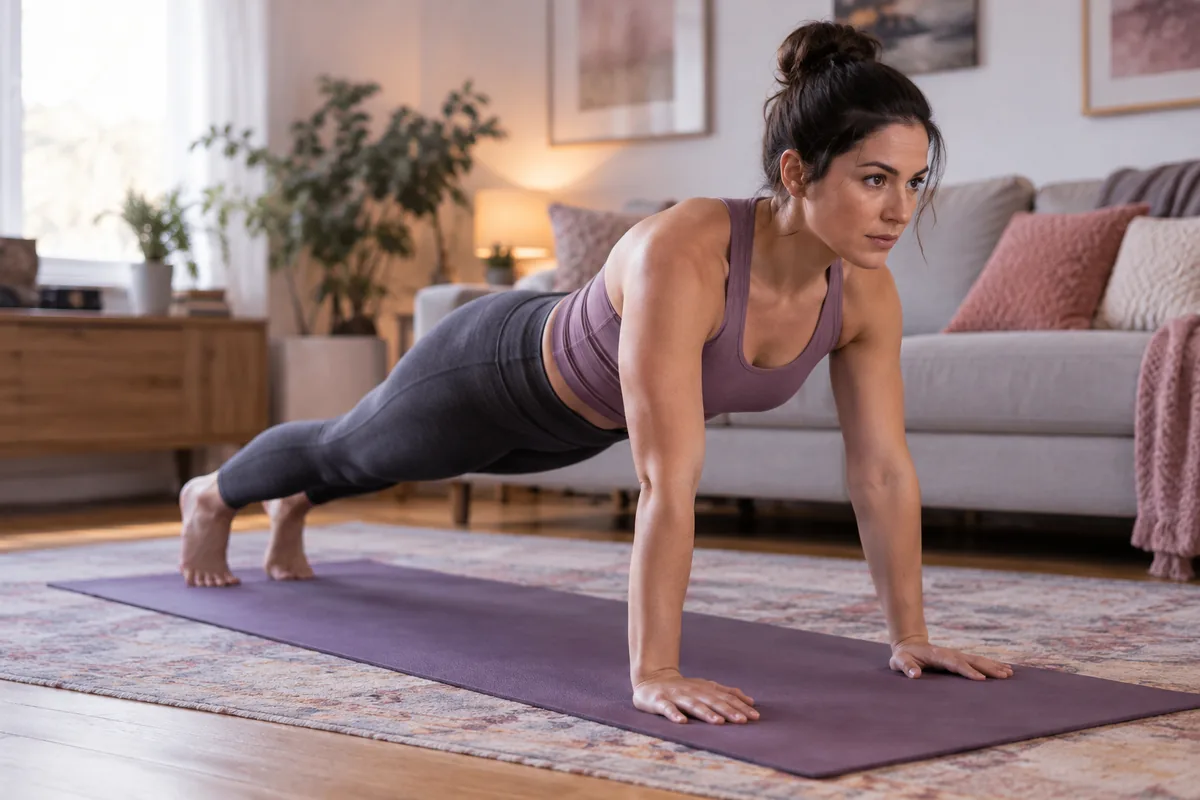
Forearms are the obvious fallback when the arms tire, with a pillow or blanket underneath. There is a catch. In the standing version the hips stay at the giver’s waist, so dropping onto the forearms tilts the head further down. Forearms work best in the seated version, where the lower height makes them more comfortable. A receiver who struggles to hold a push-up position will find the standing version too long a hold.
The standing partner: grip, lower back and knees
The giver carries part of the receiver’s weight while also moving. That amounts to a lift held at an awkward height, so ordinary workplace lifting advice offers a fair comparison. The UK Health and Safety Executive advises keeping a load close to your waist, keeping your feet apart and not twisting your back. Here, that means holding the legs close against your hips and turning with your feet.
The usual grip is at mid-thigh, though the giver can move it to the waist. The receiver can wrap their legs around the giver’s waist for extra hold. In the kneeling wheelbarrow position, the lift gets easier but the knees take the weight, so put pillows under them.
Head-down dizziness
In the floor-based versions, the receiver’s head sits lower than their hips, so blood collects toward the head and some people feel lightheaded or flushed. Change position every so often so the receiver can bring their head back above their heart.
How much can a head-down position matter? A Pacific University study gives a steep example. In healthy young men tipped fully upside down for a few minutes, eye pressure roughly doubled. The wheelbarrow’s tilt is far gentler than full inversion, so treat it as a steep comparison rather than a direct measure. The waterfall position page covers head-down positions in more depth.
Height and weight differences
Hip height decides the angle. Suppose the giver is much taller than the receiver: the receiver’s hands end up far below their hips, and the plank turns into a steep slope. A low, stable step under the receiver’s hands evens it out; a cushion only helps if it is firm and does not shift under weight. The giver can also widen their stance or kneel, which lowers both sets of hips. A shorter giver has the opposite problem, because the receiver’s hips sit low. Then the receiver’s hands need to go lower too, such as on the floor rather than a bed edge. The giver should not stand on anything that could wobble.
Body weight matters too, mostly for the giver. A heavier receiver means a heavier lift, and the HSE’s advice not to lift more than you can easily manage applies here. Where the lift feels heavy, the supported and seated versions give a similar angle with far less strain.
Falls and safety: getting in, holding, getting out
Floor, surface and cushions
Falling is the main risk, and the face and upper body are what hit the floor. Put pillows or cushions down and clear the surrounding space first. Remember that a rug that slides on a hard floor is more dangerous than bare boards, so test it before anyone puts weight on it.
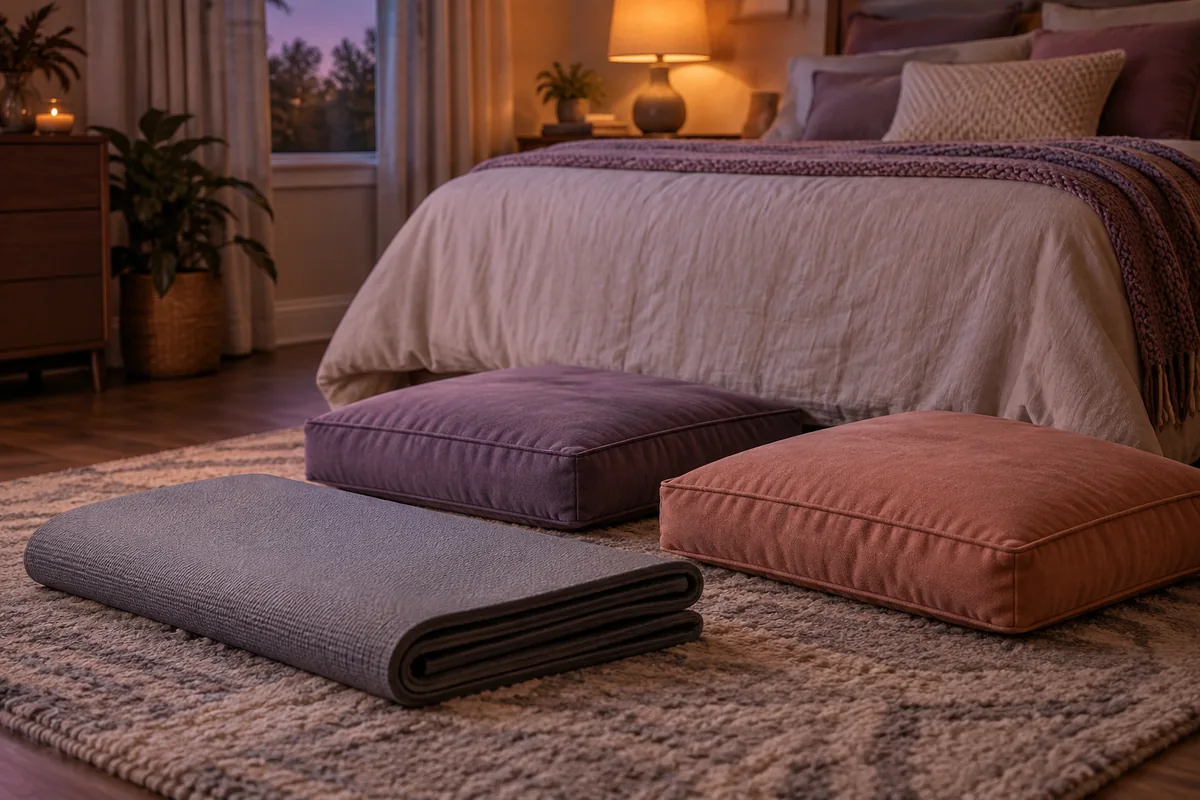
With supported versions, the support itself has to stay put. Anything that rocks, slides or rolls makes the position more dangerous, not less. That rules out office chairs, bar stools and most beanbags. A bed pushed against a wall, a heavy sofa or a solid ottoman works better.
Getting in and out from a supported start
Most slips happen during the change of position, so it helps to plan the way in. Start with the receiver’s hands or forearms on the bed edge, then lift the legs. For the kneeling version, start from doggy style and lift the legs from there; from the floor, start on all fours and move through a push-up.
Getting out matters just as much. Ideally, the giver lowers the legs to the floor first, one at a time, before the receiver lets go with their hands. Afterwards, the receiver rests on hands and knees for a moment and sits up slowly. The NHS advises against sudden changes of posture for people prone to dizziness, and that advice fits the end of a head-down hold.
Short holds and a stop signal
Plan short holds with rests in between, because arms tire quickly in a plank and an exhausted receiver drops instead of lowering gently. Agree on a signal before you start that the receiver can give without lifting a hand, since both hands are holding them up. A word works; a pre-agreed sound works when they are short of breath. The giver can also check in at each rest rather than waiting for a signal.
Whenever the signal comes, the legs go down immediately. The position should never feel painful, so treat pain as a stop signal too.
When wrists, eyes or blood pressure say skip it
Some conditions make the standard version a poor choice. Carpal tunnel syndrome is pressure on a nerve in the wrist, and the NHS advises cutting down on anything that often bends the wrist or involves gripping hard. A receiver with wrist trouble can use forearms or the seated version instead.
People with glaucoma or high blood pressure should know that the Pacific University authors say inversion devices may be unsuitable. A gentle tilt is less than full inversion, but skipping head-down holds, or asking a doctor first, is the safer call.
Partners with a penis have one additional risk to understand. Penile fracture usually happens during vigorous sex, and it is treated as a urological emergency. The reverse cowgirl guide explains the warning signs and what to do.
Easier ways to get the same angle
When the full position feels like too much, three easier setups get close to the same rear-entry angle.
The bed version is the closest match: the receiver lies stomach down with their legs off the edge, and the giver stands between them. It gives a similar angle without anyone holding a plank the whole time, and it is the version we would suggest to most couples first. Nobody holds anyone’s weight, and a slip lands on the mattress rather than the floor, though the bed edge itself can still catch a shin or hip.
Doggy style is the other obvious choice. Both partners keep their knees on the bed, and the receiver can drop onto forearms or a pillow at any time. Because the kneeling wheelbarrow starts from doggy style, the two are easy to alternate between whenever arms get tired.
The kneeling wheelbarrow position is the middle step. It keeps the shape, shortens any fall and puts less pressure on the receiver’s arms. For setups that cost even less effort, see the low-effort lying-down positions.
Who the wheelbarrow suits, and who should skip it
The wheelbarrow suits some couples well and others not at all. Here is a quick check:
- Good fit: a receiver who can hold a push-up position comfortably, and a giver with a steady back and stance.
- Good fit with changes: couples with a big height gap, using the kneeling or supported version and a cushion under the hands.
- Seated version instead: a giver who tires holding a standing lift, since sitting makes the hold less strenuous. It may ease some strain, but it is not proven to suit a particular knee or back condition; ask a clinician if you have one.
- Skip the standard version: anyone with wrist pain, carpal tunnel symptoms or a recent shoulder injury.
- Skip head-down holds: people with glaucoma, high blood pressure or a habit of fainting when they stand up.
- Wait a while: new partners, since the position needs trust and clear signals.
That last point matters more than it looks. A fall onto the face is the main risk, and avoiding it depends on one partner trusting the other to lower them gently.
FAQ: quick answers before you try it
Why do people call it a wheelbarrow?
There are two explanations, and both hold up. SexInfo101 links the name to wheelbarrow races, the game where one player walks on their hands while a teammate holds their legs. Healthline adds that the standing partner looks like someone pushing a wheelbarrow.
Is the wheelbarrow position hard?
It asks more than many positions, though nobody has ranked positions by difficulty in a study. WebMD rates it as an intermediate position, and Healthline says the receiver needs a lot of abdominal and arm strength. The supported and kneeling versions ask much less, and the fully standing version is optional, not a goal.
Do you have to do the wheelbarrow standing up?
No. In the kneeling version, the giver kneels behind and both bodies stay lower. In the seated wheelbarrow position, the giver sits on the edge of a bed or chair. That is less strenuous but needs more teamwork, and the giver still supports the receiver’s legs. The receiver can also rest their upper body on the bed.
What is the reverse wheelbarrow position?
This variation turns the receiver face up, so they arch backwards into a bridge with their hands on the floor, while the standing partner holds their waist or thighs. It needs a very flexible back, and the blood rush to the head is stronger. Few health publishers describe it, so treat the name loosely.
What muscles does the wheelbarrow position work?
The receiver mainly uses the arms, shoulders and core, which hold the plank. Meanwhile the giver’s legs, back and grip do the work of holding part of a partner’s weight. It can feel like a workout, but the holds are short and uneven, so it will not replace one.
Choosing your version of the wheelbarrow
The wheelbarrow is a strength position as much as a sex position. The receiver holds a plank, the giver holds part of their weight, and both have to stay balanced at the same time.
That combination explains why the best starting point for most couples is the supported version. Put the receiver’s upper body on a stable bed edge, lay pillows on the floor, and agree on a stop signal. Many couples happily stay there; the kneeling and floor versions are options, not the next level. Keep holds short and come up slowly.
Whenever wrists, eyes or blood pressure say no, the bed version or doggy style give a similar angle for far less effort.
Related reading
- Edge of Bed Sex Positions: Height Setup, Butterfly, T-Bone and More
- Doggy Style Position: Setup, Variations and How to Stay Comfortable
- Waterfall Sex Position: Two Versions, Head-Down Risks and Gentler Options
Sources
- Wheelbarrow Sex Position: What It Is and How It’s Done - WebMD (medically reviewed by Gabriela Pichardo, MD)
- Wheelbarrow Sex Positions Family - SexInfo101
- 10 Things to Know About the Wheelbarrow Sex Position - Healthline (Jen Anderson; medically reviewed by Janet Brito, PhD, LCSW, CST-S)
- Supported Wheelbarrow Sex Position - SexInfo101
- Kneeling Wheelbarrow Sex Position - SexInfo101
- Reverse Wheelbarrow sex position: everything you need to know - share&solo
- Manual handling at work: Good handling technique - Health and Safety Executive (UK)
- The effects of inversion chair therapy on intraocular pressure and systemic blood pressure - Pacific University (MSc Vision Science thesis)
- Low blood pressure (hypotension) - NHS
- Carpal tunnel syndrome - NHS
- Can it wait? A systematic review of immediate vs. delayed surgical repair of penile fractures - Canadian Urological Association Journal, via PMC